 Dingzhu auto
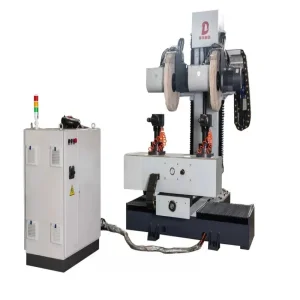

Industrial Whitepaper: Automated Metal Surface Finishing
Decarbonization, Precision Control, and Intelligent Robotic Paradigms Driving the Nagoya Industry 4.0 Ecosystem.
1. Nagoya’s Industrial Ecosystem & The Precision Polishing Imperative
The Nagoya metropolitan area, encompassing the broader Chubu economic region, stands as the undisputed heart of Japan’s heavy industrial, aerospace, and automotive manufacturing. Generating over 1% of the world’s manufacturing output, Nagoya hosts deep-rooted supply chains that feed high-precision components to global markets—from aerospace powerplants to complex hybrid vehicle drivetrains. In this hyper-competitive, quality-centric landscape, surface preparation, deburring, and polishing are no longer mere finishing touches; they are core functional imperatives.
"Precision polishing is the critical bridge that transforms standard cast or forged metal into high-performance components. In aerospace and automotive engineering, surface deviations of even a single micron can lead to frictional degradation, thermal stress, or mechanical fatigue failure."
For Nagoya's automotive manufacturers, the aesthetics and hydrodynamics of metal trims, intake manifolds, steering knuckles, and fluid valves govern both brand perception and fuel-use efficiency. Historically, the Chubu region relied heavily on high-skilled artisans (the legendary Takumi) to manual-polish critical parts. However, Japan's severe demographic shifts, characterized by an aging population and a shrinking industrial workforce, have created a critical bottleneck. Local manufacturers are pivoting swiftly toward high-performance CNC Automatic Polishing Machines and robotic metal finishing cells to maintain their globally recognized standards of excellence while building sustainable, human-independent operational resilience.
2. The Evolution of Metal Surface Finishing: Global CNC & Robotic Trends
The global metal surface finishing industry is undergoing an unprecedented paradigm shift, driven by advancements in robotic force-sensing, vision systems, and deep-learning control algorithms. In previous eras, CNC polishing machines operated on rigid, predefined toolpaths. While effective for simple geometric surfaces, these legacy systems struggled with complex, organic cast pieces, often over-polishing edges or under-polishing recesses due to raw part variances.
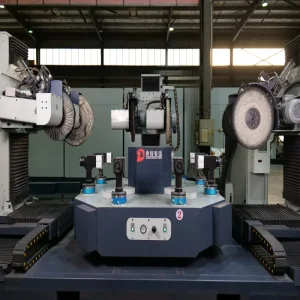
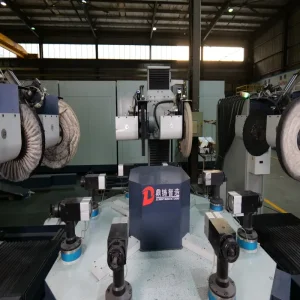
Today, next-generation Automatic Robot Polishing Systems feature active, multi-axis compliance control. Outfitted with real-time force-torque sensors, these robotic systems maintain a constant contact pressure against the metal surface, adjusting in milliseconds to accommodate casting imperfections and tool wear. The integration of 3D vision scanning allows the machine to map the exact contours of each individual workpiece, dynamically recalculating the path for optimized abrasive application. Furthermore, strict environmental mandates have accelerated the development of dry, sealed containment systems that capture microscopic metallic dust, mitigating safety hazards and environmental footprints, aligning perfectly with modern corporate ESG targets.
3. Sourcing Dynamics: Why Global Buyers Target High-End Automations
Global manufacturing hubs—from Detroit and Stuttgart to Nagoya—face identical challenges: surging labor costs, stringent occupational safety regulations, and the constant demand for lower part-defect rates. When industrial procurement teams source CNC polishing machinery, their checklist focuses on reliability, flexibility, and return on investment (ROI).
Manual polishing presents major operational liabilities. A worker’s physical fatigue leads to inconsistent surface roughness (Ra) across production shifts, yielding higher scrap rates. Furthermore, prolonged exposure to metal dust and intense vibration poses long-term health risks, leading to worker compensation claims and high turnover. By implementing automated multi-spec workpiece polishing lines, global enterprises secure:
• Absolute Uniformity: Sustained mirror or satin finishes with deviation tolerances below Ra 0.1 μm.
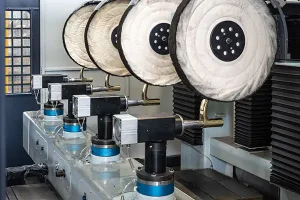
• Flexible Manufacturing: Adjustable wheel spindles and quick-change abrasive modules that can switch from polishing sanitary faucets to steering components in minutes.
• Predictable Yields: Standardized cycle times that allow integration into Just-in-Time (JIT) supply chain systems.
4. China’s Industry 4.0: Supply Chain Resilience & Efficiency Advantages
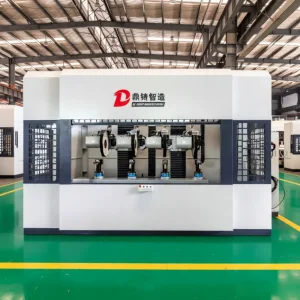
At the center of Xiamen DingZhu (DZ) Intelligent Equipment Co., Ltd's market-disrupting technology is our deep integration into China’s hyper-evolved Industry 4.0 manufacturing cluster. This provides an unmatched strategic advantage for global buyers, especially in high-density industrial hubs like Nagoya.
"The convergence of robust engineering talents, localized high-grade alloy supply chains, and specialized components production in Xiamen allows us to deliver world-class robotic cells with unrivaled velocity and economic efficiency."
China's industrial ecosystem provides a dynamic resilience that protects our global clients from supply chain shocks. At DingZhu, our core components are sourced from globally recognized suppliers, while the structural frames, custom tooling, robotic programming, and software integration are completed in-house. This comprehensive control allows us to reduce equipment lead times by 30-40% compared to Western competitors. Furthermore, we maintain standardized spare parts warehouses within our global service networks, enabling "zero waiting" replacement for critical wearing components, improving overall maintenance efficiency by 60% for overseas operations.
5. Advanced Localized Application Scenarios in Nagoya
Implementing CNC polishing solutions in Nagoya requires a deep understanding of the local industry's specific challenges. Here is how DingZhu's technical solutions translate into actual shop-floor successes in Central Japan:
Automotive Precision Components
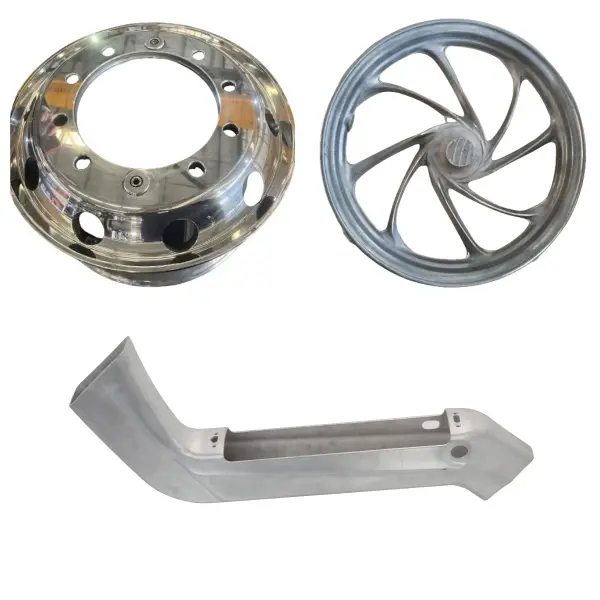
In Nagoya's automotive plants, robotic grinding and polishing cells are deployed to process critical engine parts, transmission casings, and alloy wheels. By automating the deburring of complex die-cast automotive components, our robotic systems eliminate flashing and surface stress concentrations that could jeopardize structural integrity under high fatigue cycles.
High-Precision Valves & Sanitary Ware
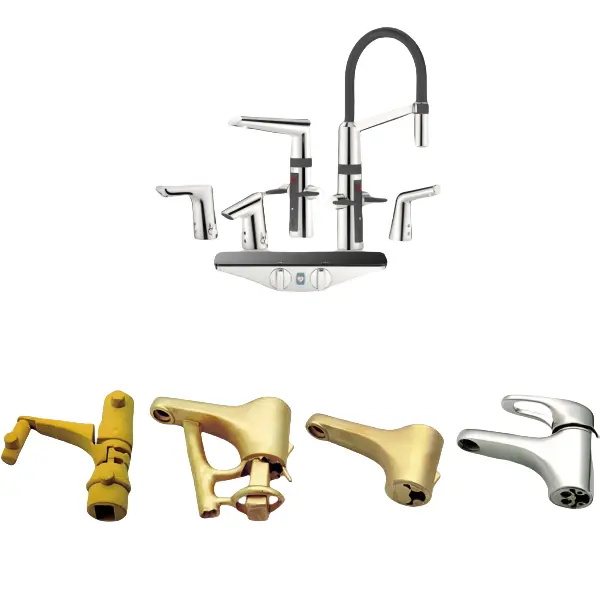
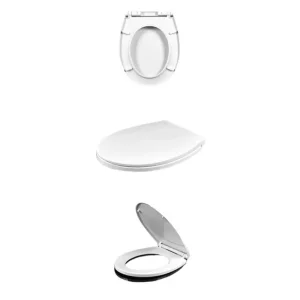
Nagoya's advanced plumbing and hydraulic component manufacturers utilize our Low-Pressure Die Casting (LPDC) machines in tandem with our multi-axis robotic grinding cells. The automated cell processes intricate brass faucets and industrial valves, achieving an immaculate mirror-finish preparation before the electroplating phase, saving up to 50% in chemical treatment costs due to minimized surface micro-imperfections.
High-Integrity Bent Tube Applications
For Nagoya's specialized machinery builders, polishing curved, bent tubes to a mirror finish is a notorious challenge. Our CNC Robotic Bent Tube Polishing Machines employ programmable abrasive belt stations that follow the complex path of pre-bent pipes, ensuring a flawless mirror finish on decorative architectural fixtures or high-purity medical gas piping.