Introducing our premier automatic and robotic units designed to seamlessly integrate with local European industrial facilities requiring high-precision output.
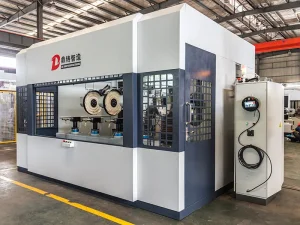
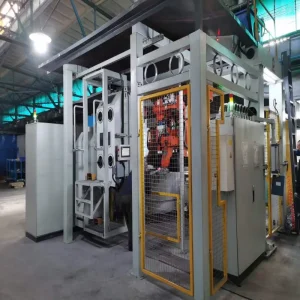
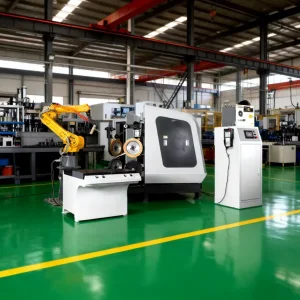
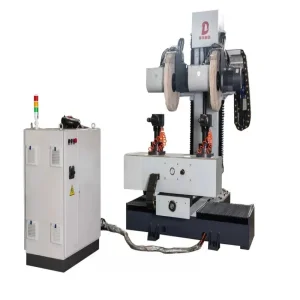
Berlin and the surrounding Brandenburg metropolitan region are undergoing an extensive industrial renaissance. Propelled by the principles of **Industry 4.0**, modern manufacturers are shifting away from traditional manual processing methods to combat acute skilled labor shortages, rising energy costs, and increasingly stringent occupational health and safety regulations. Within this highly competitive framework, surface finishing is no longer viewed as a secondary cosmetic touch-up. It has instead evolved into a decisive factor for mechanical integrity, visual quality, and functional endurance.
For industries located in industrial hubs like Adlershof, Marienfelde, and Spandau, precision is the primary benchmark. High-value sectors—such as medical instrument manufacturing, high-end optical components, aerospace engineering, and luxury plumbing hardware—require surface roughness values (Ra) below 0.1 µm. Achieving these specifications consistently across thousands of parts is impossible with manual operators. CNC polishing systems, built around multi-axis motion control and closed-loop force sensors, solve this problem by eliminating human variance and stabilizing yield rates at a reliable 99.8%.
Furthermore, the strict European Union environmental guidelines (such as the REACH regulation and energy consumption mandates) dictate that advanced production lines must reduce dust emissions and optimize energy use. Our automatic polishing solutions address these regulatory challenges. By integrating closed-circuit vacuum enclosures and intelligent motor controllers, they ensure full environmental compliance while preserving the high output rates required to maintain competitive standing in the European and global markets.
Combining innovative Chinese manufacturing flexibility with absolute adherence to global engineering standards since 2016.
Founded in 2016, Xiamen DingZhu (DZ) Intelligent Equipment Co., Ltd. is a leading manufacturer specializing in the research, development, and supply of highly advanced foundry and surface treatment equipment. Our portfolio includes automated core shooting lines, gravity die-casting setups, and state-of-the-art robotic grinding and polishing systems. With a strong track record of serving over 80 countries, we provide German and European businesses with robust machinery designed to operate in high-demand industrial environments.
Backed by over two decades of engineering research, our machines utilize industry-proven components and structures. DingZhu systems are characterized by a failure rate significantly below the global industry average, ensuring maximum operational runtime.
Our engineering team has focused on foundry automation, grinding, and polishing for more than 20 years. We guide partners through every phase of the project, including initial product analysis, custom fixture design, and system integration.
With established service centers in key markets worldwide, DingZhu maintains a robust spare parts network. Our inventory covers over 80% of common wear parts, enabling fast replacements and minimizing system downtime.
A deep dive into the mechanical and control systems driving high-precision surface finishing.
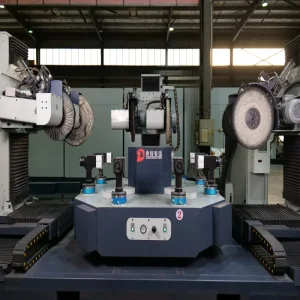
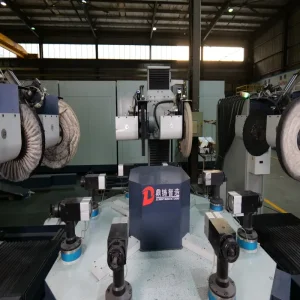
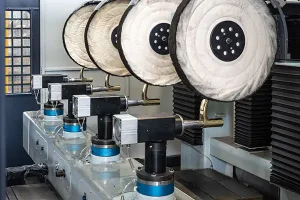
Modern surface finishing relies on two main structural layouts: multi-axis CNC polishing machines and multi-axis articulated robotic arm cells. Multi-axis CNC machines utilize rigid cartesian coordinate tables (typically 4-axis to 6-axis configurations) to move components along mathematically defined toolpaths. This layout provides exceptional structural stiffness, making it ideal for symmetrical parts like pipes, tubes, and cylindrical housings.
Conversely, articulated robotic cells offer greater kinematic flexibility, allowing the system to process complex, non-symmetrical shapes such as brass faucets, sanitary wear handles, and automotive engine blocks. DingZhu designs and builds both configurations. This allows us to supply the optimal mechanical layout based on your specific component geometry, cycle time targets, and space constraints.
Polishing processes must compensate for slight variations in casting dimensions. Without real-time adjustments, minor deviations can lead to insufficient polishing or deep gouges that ruin the workpiece.
To address this, our systems utilize active force compensation units. These sensors monitor the contact force at the tool interface up to 1,000 times per second. By dynamically adjusting the machine's position to maintain a constant contact force (ranging from 5 N to 100 N depending on the material), the system ensures a highly uniform surface finish regardless of cast variances.
| Feature Parameter | Typical Manual Polishing | DingZhu CNC / Robotic System | Impact on Production Output |
|---|---|---|---|
| Surface Consistency (Ra) | 0.6 µm – 1.8 µm (highly variable) | < 0.1 µm (fully homogeneous) | Substantially reduced reject rates |
| Force Compliance | Subjective human tactile feel | Active dynamic feedback (1 kHz loop) | Elimination of workpiece gouging |
| Dust Exposure Control | Difficult to isolate manually | 100% enclosed vacuum chamber | Strict compliance with EU health standards |
| Abrasive Media Wear Life | Inconsistent, unpredictable wear | Automated compensation paths | 35% reduction in consumable costs |
As polishing wheels and belts wear down, their radius decreases, which reduces peripheral speed and contact pressure. Our CNC polishing software compensates for this wear by calculating the cumulative contact time and adjusting the machine's axes to maintain correct positioning. This keeps tool pressure consistent throughout the lifespan of the abrasive media, ensuring the same high-quality finish from the first part to the last.
Targeted mechanical polishing systems engineered to meet the strict quality standards of regional industries.
Polishing complex brass and zinc alloy valve bodies prior to chrome electroplating. Our systems achieve a mirror finish that prevents plating defects and guarantees a flawless surface.
Processing automotive structural castings, housings, and cosmetic brackets. The system quickly removes flash and parting lines, preparing parts for assembly or coating.
Providing internal and external finishes for food-grade and chemical-grade bent stainless steel piping. The machines eliminate microscopic pockets where bacteria or corrosive agents could build up.
Direct, engineering-focused answers regarding the deployment, programming, and economics of CNC polishing systems.
We integrate an active force compliance control system, which uses pneumatic or electro-hydraulic servo valves. This allows the contact tool to float and self-adjust in real-time. The machine's control system measures surface resistance at 1 kHz, ensuring constant pressure along complex curves. This prevents localized heat buildup, deep gouging, and uneven wear.
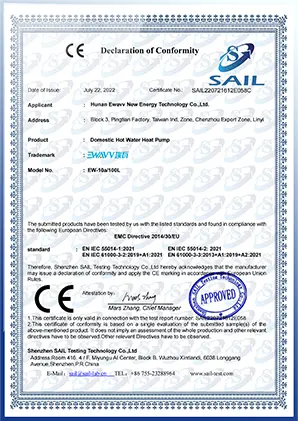
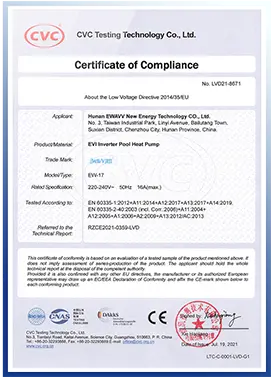
Yes. All machines built for the European market are fully CE-certified. We configure the systems to run on standard European power supplies (400V, 3-phase, 50Hz) and utilize top-tier industrial electronics, including Siemens PLCs, Schneider switchgear, and Wittenstein gearboxes, to ensure full reliability and easy maintenance.
The lifespan of consumables like polishing belts and sisal buffs varies based on the workpiece material (e.g., brass versus stainless steel). To ensure consistent results, our control software tracks tool usage time and dynamically adjusts the CNC path coordinates. This automatically compensates for tool wear, maintaining identical finishes across long production runs.
Each system can be equipped with an industrial VPN router for secure remote access. This allows our engineering team in China to perform diagnostic tests, update PLC programs, and assist with commissioning directly over the network. If on-site support is required, our regional partners in nearby service hubs can be dispatched to your facility quickly.
Yes. Our systems feature multi-program storage and automatic tool-changing capabilities. A single cell can be programmed to run multiple profiles. When switching between parts, the operator simply selects the corresponding program on the HMI and swaps out the quick-change fixtures, minimizing downtime between different production batches.
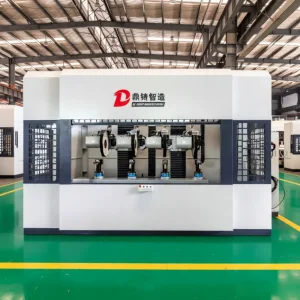
Browse our full selection of heavy-duty polishing machines and robotic configurations designed for high-throughput production environments.
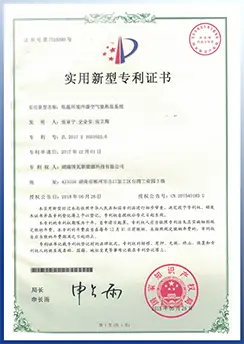
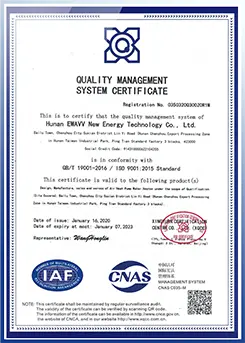
Ensuring compliance with international engineering, manufacturing, and safety standards.
 Dingzhu auto