High-precision machinery engineered to meet strict EU standards, optimizing cycle times and providing superior surface quality.
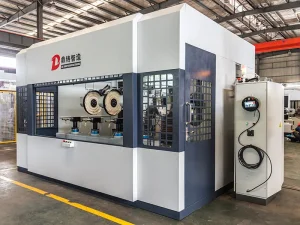
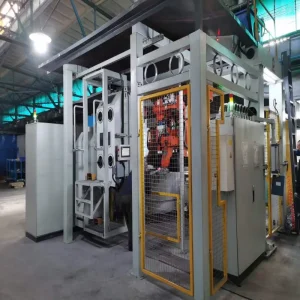
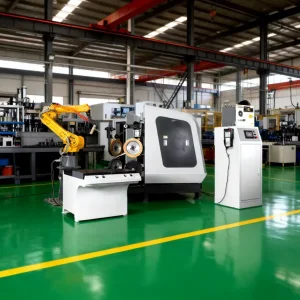
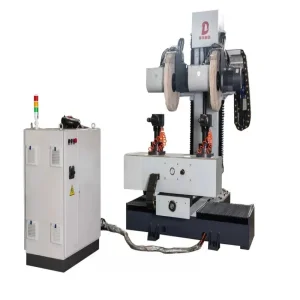
A comprehensive analysis of high-precision CNC polishing technologies, CE compliance, and strategic supply chain alignment for Netherlands manufacturing leaders.
The Netherlands has established itself as an elite player in global high-tech engineering, driven heavily by clusters such as the Eindhoven Brainport, the industrial port of Rotterdam, and specialized manufacturing labs across Twente and Almere. The focus of Dutch manufacturing is defined by strict tolerances, high-mix/low-volume production, and a strong emphasis on automation. As manual labor costs rise and labor regulations (governed by the Dutch Working Conditions Act, or Arbowet) become increasingly restrictive regarding repetitive strain and hazardous dust exposure, the transition from manual buffing to enclosed robotic systems is no longer optional—it is a critical strategic upgrade.
In advanced sectors such as semiconductor lithography sub-assemblies, high-end food and dairy processing equipment, maritime superyacht hardware, and medical orthopedics, surface roughness (quantified by Ra and Rz metrics) directly dictates product performance, durability, and sanitary compliance. Manual polishing fails to guarantee the absolute consistency required by European engineering protocols. Modern automatic CNC polishing machines bridge this gap by deploying multi-axis robotic arms equipped with force-feedback sensors that maintain constant abrasive pressure, delivering micro-inch precision regardless of complex component geometries.
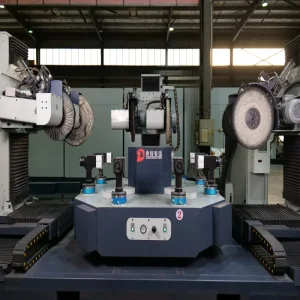
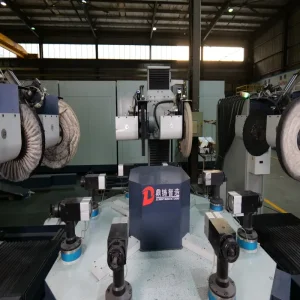
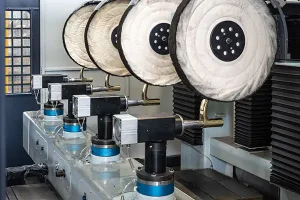
To understand the competitive edge offered by modern automated polishing, one must examine the internal technological roadmap of automated surface treatment systems. The standard polishing configurations of today leverage multi-axis interpolated controls (frequently 6-axis robotic arms paired with 2-axis auxiliary rotary tables) to ensure complete accessibility to complex curved shapes like bent tubes, sanitary brassware, and multi-contoured automotive components.
Active Force Feedback (AFF): The cornerstone of robotic finishing is closed-loop real-time pressure control. Traditional CNC systems followed a fixed toolpath, which often resulted in over-polishing on outer curves and under-polishing in recesses due to minor dimensional variations in raw castings or forgings. Active force-feedback actuators monitor resistance at the contact point hundreds of times per second. This enables the machine to dynamically adapt its position to keep a uniform force against the buffing wheel, resulting in a perfectly consistent surface finish.
Wet vs. Dry Finishing & Safety: When treating metals like brass, stainless steel, or aluminum, dust mitigation is crucial. Enclosed chambers with integrated wet-scrubbing systems prevent the propagation of explosive metal dust (complying directly with ATEX directives in the Netherlands). Additionally, automated belt-tensioning and automatic wear compensation algorithms ensure that as the abrasive medium wears down, the CNC adjusts its toolpath coordinates to prevent loss of finish quality.
Our tailored polishing systems address the specific needs of major Dutch industrial sectors:
Operating machinery in Western Europe demands adherence to complex safety and operational frameworks. Every CNC polishing and die-casting machine exported to the Netherlands is designed from the ground up to satisfy the CE Machinery Directive 2006/42/EC and the Low Voltage Directive 2014/35/EU.
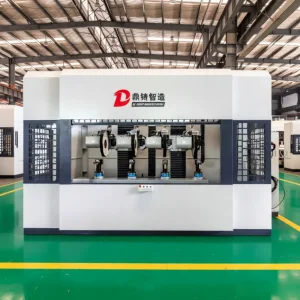
Our systems include fully enclosed cabins with safety light curtains, dual-channel emergency stop circuits (Performance Level d/e), and robust sound insulation to protect operators from noise levels that exceed European occupational safety limits. Furthermore, to address localized servicing, we utilize globally accessible components (such as Siemens or Rexroth control systems, Omron safety relays, and SMC pneumatics), ensuring that replacement parts are readily available within the Netherlands or neighboring EU distribution hubs.
Xiamen DingZhu (DZ) Intelligent Equipment Co., Ltd. leverage advanced manufacturing techniques to deliver high-quality machinery at competitive price points. Our engineering facility operates on Smart Industry 4.0 principles, employing rigorous quality control from raw material receipt to final dry-run testing.
Our supply chain features robust backups for critical components, mitigating global bottlenecks. When partnering with us, Dutch manufacturers benefit from optimized production scheduling, predictive maintenance capabilities through integrated IoT sensor suites, and remote diagnostic services that allow our team in China to assist with PLC fine-tuning and debugging across time zones.
Xiamen DingZhu (DZ) Intelligent Equipment Co., Ltd was founded in 2016. We specialize in the research, development, and manufacture of automated foundry equipment for plumbing hardware, sanitary fittings, automotive components, and valves. Our product range includes automatic core shooting machines, gravity die casting machines, automated Low Pressure Die Casting machines (LPDC), and custom robotic cell grinding and polishing machines.
By integrating precision engineering with user-friendly control software, we assist factories in cutting manual finishing costs by up to 80% while enhancing work safety and consistency across the board.


Combining over 20 years of core technical expertise with local industrial compliance.

Benefit from 20 years of technology precipitation. Our equipment adopts mature, market-verified technical solutions with failure rates well below the industry average.

Our core engineering team has focused on casting, grinding, and polishing for over 20 years, providing full-cycle support from model selection to process upgrades.

With localized service outlets and dedicated remote diagnostic engineers, we offer swift responses to ensure minimal downtime for your line.

Standardized parts warehouses in overseas distribution networks cover over 80% of wearing parts, enabling rapid replacement and high system availability.
From sanitary fittings to automotive sub-assemblies, our automated solutions handle complex geometries with ease.
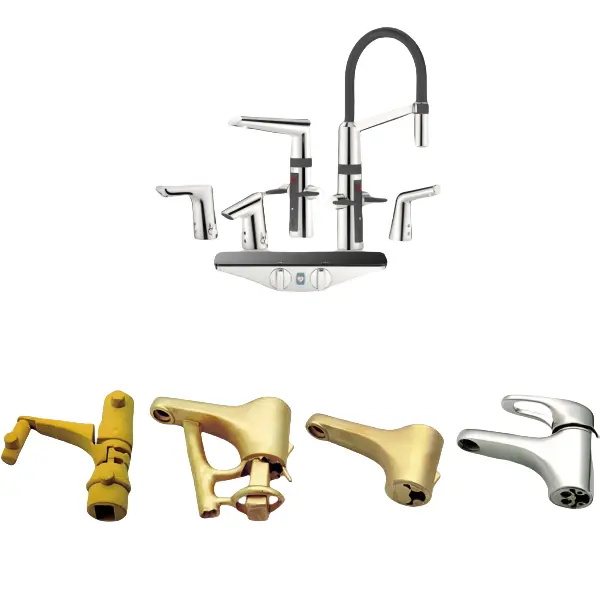
Precision grinding and buffing of complex faucet channels and valve paths to prep for plating.
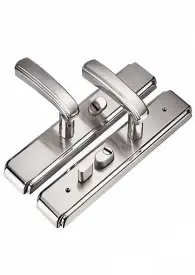
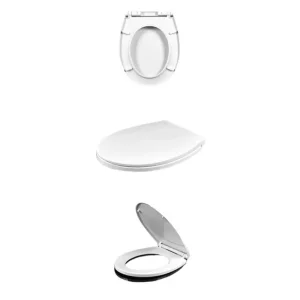
Consistent brushed or high-mirror satin surface enhancement for metal door handle panels.
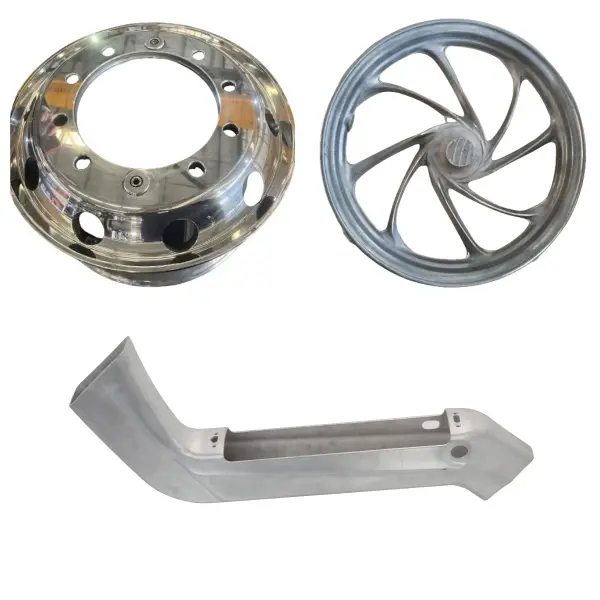
Deburring and polishing cast iron, steel, and aluminum components under high force tolerance.
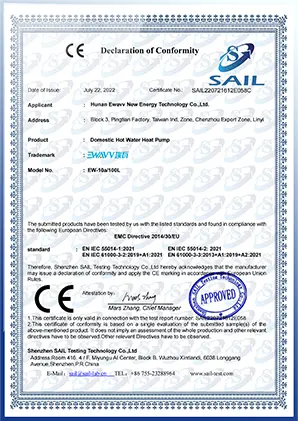
Our engineering facility adheres to rigorous international production standards.
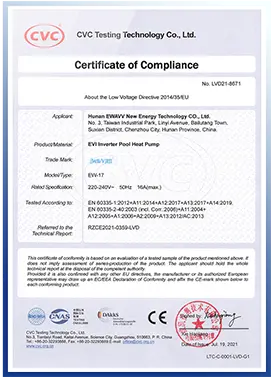
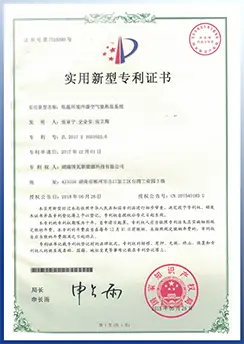
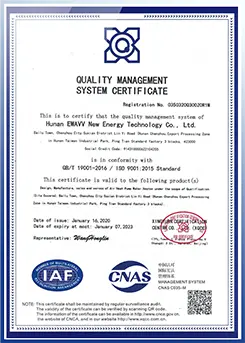
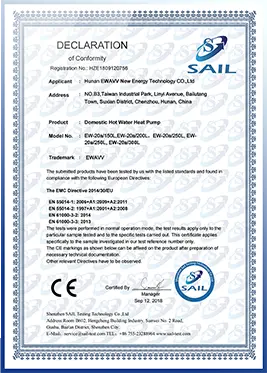
Explore our full line of automated finishing systems designed to optimize yield and consistency.
Detailed answers about automated metal finishing, CE machinery standards, and import guidelines for the Netherlands.
Yes. Every machine shipped to the Netherlands is built to comply with CE directives, including the 2006/42/EC Machinery Directive and the 2014/35/EU Low Voltage Directive. Systems feature fully enclosed cabins, safety light curtains, and integrated dust collection units.
Unlike fixed-path CNC systems, our machines utilize active force-feedback sensors that dynamically measure resistance at the contact point. The system automatically adjusts robot positioning to maintain uniform pressure, compensating for dimensional variations in raw castings.
We design systems with ATEX-compliant wet-scrubbing filtration units. Polishing dust is suppressed immediately with wet mist systems, preventing the formation of explosive dust clouds within the enclosed polishing cabinet.
Our CNC controllers support encrypted VPN gateways for remote access. With authorization, our team in China can perform remote PLC diagnostics, upload toolpath corrections, and update software to ensure high machine uptime.
Leverage our customized robotic finishing systems to improve quality, reduce cycle times, and meet strict safety standards.
Send Inquiry Now Dingzhu auto