Discover industrial-grade grinding, polishing, and casting machinery engineered to maximize throughput while maintaining microns-level precision.
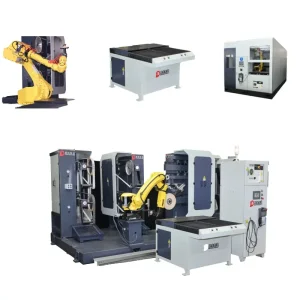
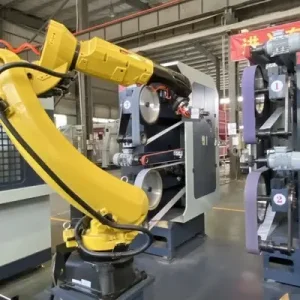
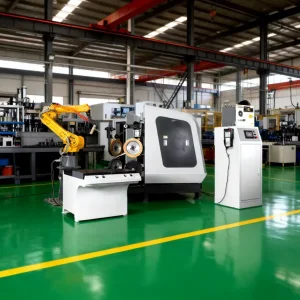
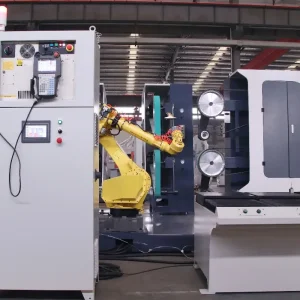
In modern industrial manufacturing, the surface quality of metallic and composite components acts as a primary benchmark for both functional performance and aesthetic value. High-precision industries, including automotive assembly, aerospace structures, plumbing hardware, and heavy engine manufacturing, demand finishing processes that meet strict mechanical criteria. The global landscape of surface finishing systems has rapidly transformed from manual, high-risk grinding workshops to advanced, digitalized, and fully automated robotic cells. This evolution is spearheaded by engineering enterprises capable of integrating heavy-duty casting machinery with smart sensory feedback control loops.
Today's international supply chain places unprecedented pressure on manufacturing plants to reduce unit cycle times while strictly adhering to safety and environmental standards (such as OSHA and REACH directives). Manual grinding and polishing methods suffer from high worker turnover, inconsistent finish quality, and severe occupational hazards caused by particulate inhalation and repetitive strain injuries. As a result, Tier-1 manufacturing hubs across North America, Europe, and the Asia-Pacific region are prioritizing the adoption of automated finishing systems. China, as a leading global machinery hub, has transitioned from producing basic mechanical components to designing advanced multi-axis CNC surface finishing workstations. These setups are capable of performing complex processing tasks on cast iron, brass, zinc alloys, and composite materials.
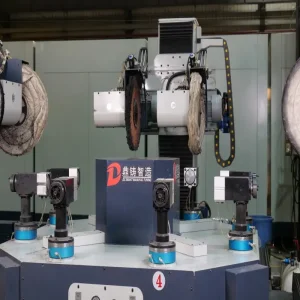
Modern factories face the challenge of reconciling dimensional inaccuracies inherited from upstream casting processes with the precise tolerances required for final polishing. When cast parts exhibit geometric variances, standard rigid automated tools often over-grind or under-grind, leading to high scrap rates. The solution lies in active force compensation technology. Integrated multi-axis robots equipped with real-time dynamic force sensors dynamically adjust the contact pressure of the polishing head against the casting surface. This allows the system to follow the true contours of the component, compensating for structural variations and ensuring a uniform, defect-free finish. In addition, the synchronization of continuous melting furnaces, high-pressure die casting, and sand core preparation into a unified automation loop minimizes thermal shrinkage and structural defects, laying a superior foundation for subsequent finishing phases.
The roadmap for high-end metal surface preparation centers around the integration of Artificial Intelligence and Industrial Internet of Things (IIoT) frameworks. The sector is moving toward a future defined by several key technological steps:
A Pioneer in Fully Automated Foundry and Intelligent Surface Finishing Infrastructure

Founded in 2016, Xiamen DingZhu (DZ) Intelligent Equipment Co., Ltd. has established itself as an industry leader in the research, engineering development, and high-volume manufacture of automated equipment tailored for the global foundry industry. Leveraging decades of collective engineering experience, DZ specializes in supplying turnkey systems for plumbing hardware, high-end sanitary fittings, automotive chassis components, powertrain casings, and industrial valves.
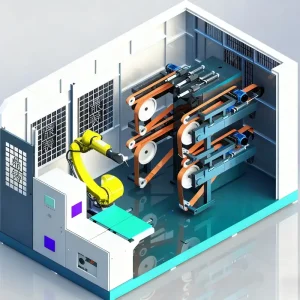
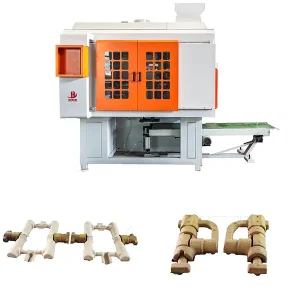
By focusing on automated production lines, Xiamen DingZhu bridges the gap between raw foundry processes and finished, high-precision products. The company’s comprehensive portfolio includes high-performance core shooting systems, gravity die casting machines, low-pressure die casting (LPDC) platforms, and robotic grinding and polishing cells. Our engineering philosophy is simple: we deliver robust, high-availability machinery that lowers cycle times, guarantees operator safety, and reduces cost-per-part metrics across demanding production shifts.


Why premier manufacturing brands rely on our engineering expertise and robust global service framework.

Built on 20 years of research and industrial experience. Our systems leverage field-proven engineering architectures, delivering failure rates significantly lower than the global industry average.

Our dedicated engineering team guides you from system selection through custom path programming to full manufacturing integration. We ensure your production line performs optimally from day one.

With established local service hubs in India, Egypt, Turkey, Iran, and beyond, we guarantee an on-site engineering response within 24 hours to keep your facility running smoothly.

Our localized spare parts hubs maintain a comprehensive inventory covering over 80% of critical wear components. This setup reduces waiting times and improves maintenance efficiency by 60%.
Engineered systems built to perform under high-volume production cycles.
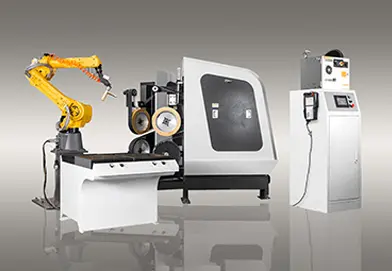
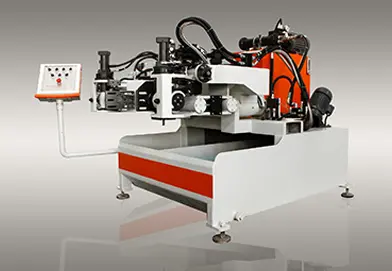
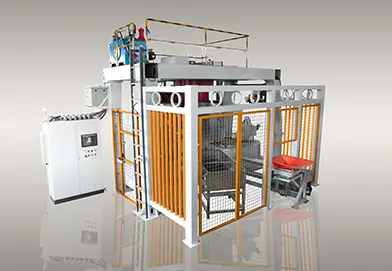
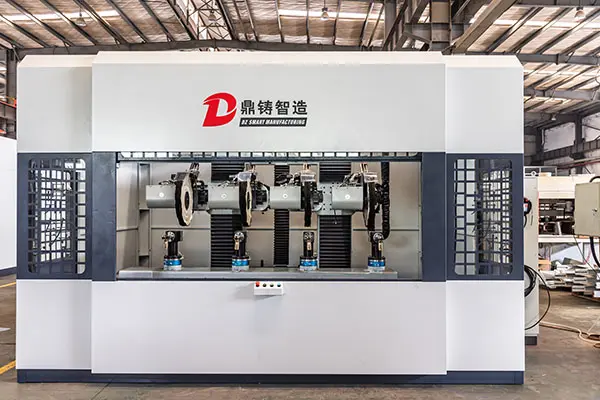
Highly adaptable solutions designed to meet the rigorous standards of premium manufacturing sectors.
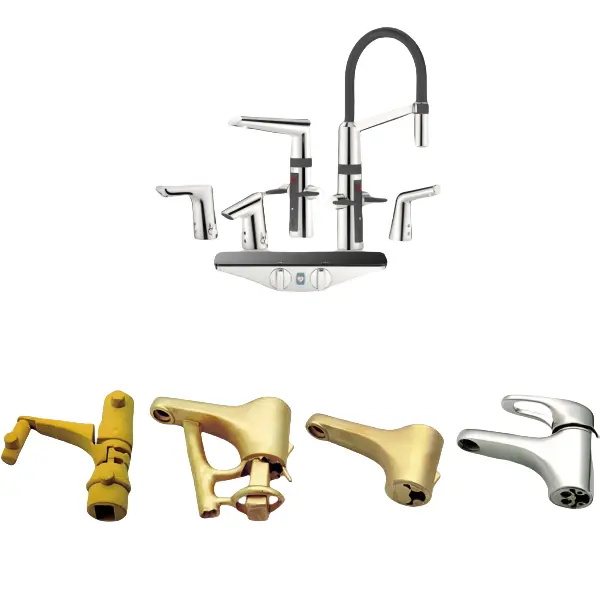
Achieving flawless, defect-free mirror finishes on brass and copper faucets. Eliminates manual buffing while preparing parts for electroplating.
Read Application Case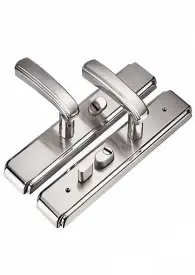
High-precision grinding and contour-following polishing for architectural hardware. Ensures dimensional stability and reliable aesthetics.
Read Application Case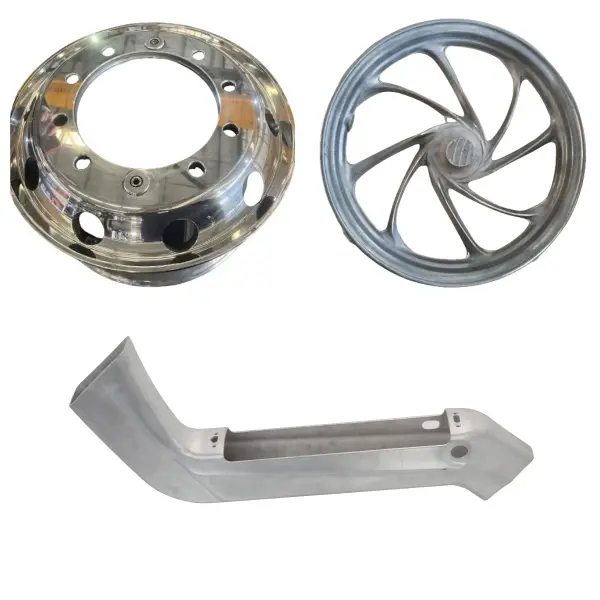
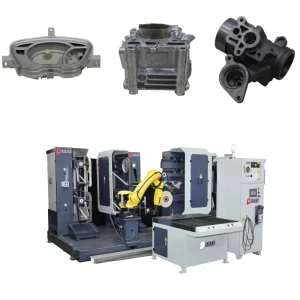
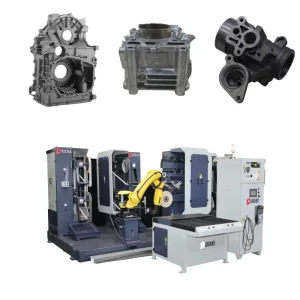
Automated grinding of high-strength alloy engine blocks and structural parts. Optimizes part interfaces and removes casting parting lines.
Read Application Case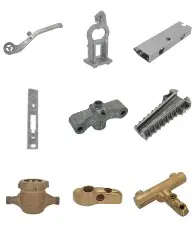
Designed for complex castings with internal geometries. Ensures thorough burr removal without affecting critical dimensions.
Read Application Case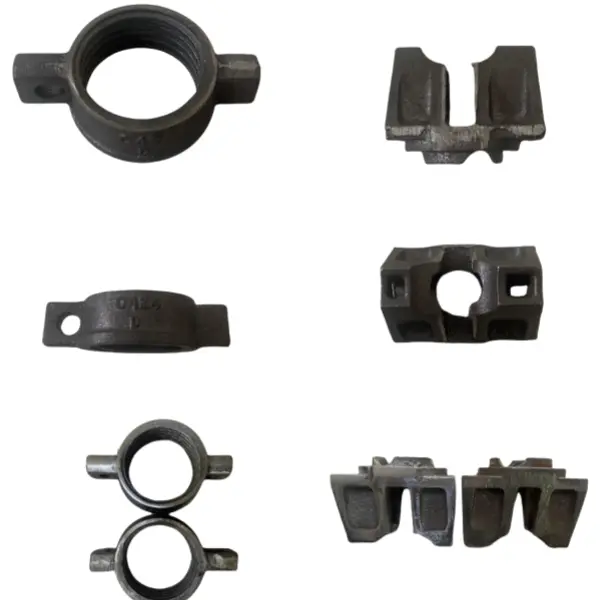
Replaces high-fatigue manual tasks. Uses robust grinding tools to remove parting lines and heavy sprues from cast surfaces.
Read Application Case
Custom finishing plans tailored to nickel-aluminum bronzes and specialized high-conductivity copper castings.
Read Application Case
Ensures smooth interior paths and clean sealing flange surfaces on high-pressure fluid valves.
Read Application Case
Automated grinding of hard-to-reach internal cavities, maintaining consistent structural thickness.
Read Application Case
Turnkey polishing lines designed for heavy industrial hinge blocks and decorative metal plates.
Read Application CaseBuilt in compliance with international engineering safety directives, ensuring seamless deployment in global markets.
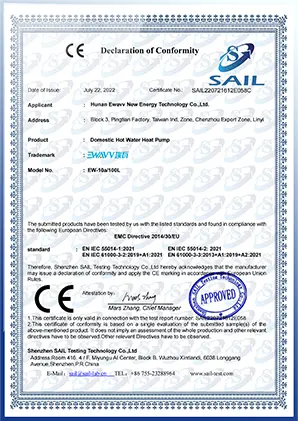
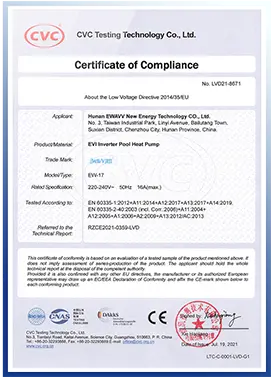
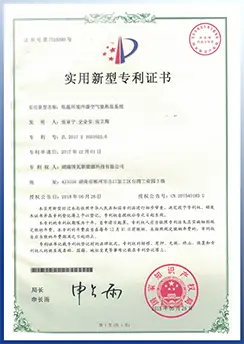
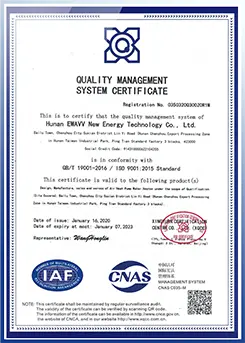
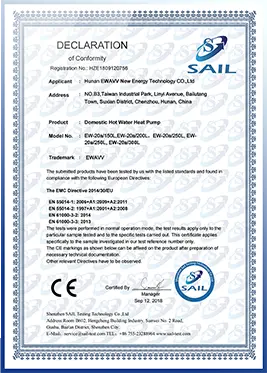
Engineering answers to the most common technical questions regarding casting, grinding, and polishing automation.
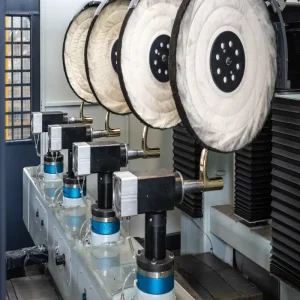
Automated dynamic compensation addresses tool wear and part variation. In traditional grinding set-ups, polishing wheels wear down over time, reducing diameter and pressure. This leads to inconsistent finishes. Our CNC systems use high-precision automatic contact compensation modules. These modules adjust tool position and feed rates in real time based on spindle current and displacement sensors. This ensures uniform contact pressure throughout long production runs, maintaining tolerances within micrometric deviations.
Low Pressure Die Casting (LPDC) fills molds under controlled pressure from the bottom up. This prevents turbulence, air inclusion, and oxide formation. In sanitary applications, this translates to dense castings free of subsurface pinholes. Consequently, when parts reach the polishing stage, there are fewer surface defects to grind out. This reduces reject rates and extends the lifespan of polishing belts.
Vertical twin-induction systems provide efficient thermal distribution and precise temperature control using advanced PID algorithms. Electromagnetic stirring occurs naturally within the melt, maintaining uniform chemical composition and reducing alloy loss. Continuous, precise temperature regulation prevents localized overheating, minimizing alloy vaporization and gaseous dissolution. This results in cleaner brass and copper alloys, optimized for casting sanitary fittings and industrial valves.
Foundries operate in harsh environments featuring high temperatures and abrasive dust. These conditions accelerate the wear of components such as contact wheels, spindle seals, and slide tracks. By keeping critical parts in local hubs (e.g., India, Egypt, Turkey, Iran), we eliminate long customs clearances and international logistics delays. This quick access increases maintenance efficiency by 60% and protects against costly, unscheduled production shutdowns.
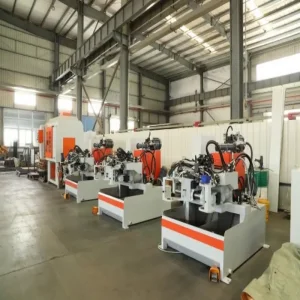
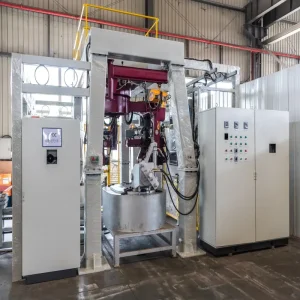
Heavy-duty hardware and precision manufacturing cells designed for industrial-scale deployment.
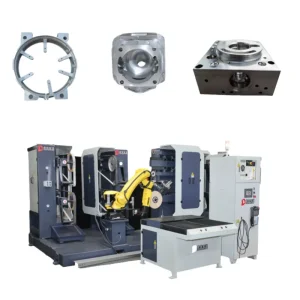
Let us optimize your production efficiency with exclusive, custom-engineered equipment solutions. Seize the advantage of high precision and reliable mechanical performance. Our team of engineering specialists is ready to design a customized system layout for your facility.
Query Project Quotation Dingzhu auto