Explore our leading industrial robotic grinding and polishing machinery engineered for casting, auto parts, plumbing hardware, and specialized alloys.
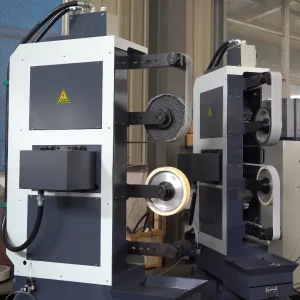
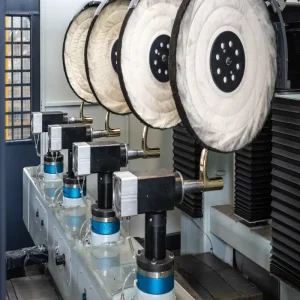
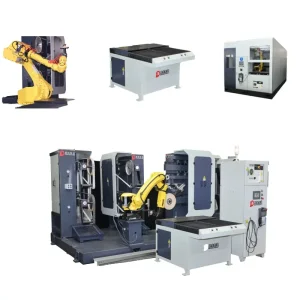
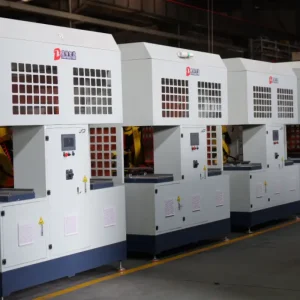
An in-depth whitepaper analysis on the rapid evolution from manual abrasive polishing to automated, smart tactile robot systems.
In modern high-precision manufacturing, the surface roughness and dimensional tolerance of metal parts are critical determinants of a product's performance, longevity, and visual appeal. The manufacturing sector is witnessing an aggressive structural shift. The traditional dependence on manual metal polishing and deburring—characterized by high occupational hazards, inconsistent surface quality, and rising labor costs—is rapidly being replaced by advanced Industrial Metal Polishing Systems. This technical transformation is paramount in sectors where geometric precision is non-negotiable, including aerospace turbines, automotive engine blocks, surgical implants, and high-end brass sanitary fittings.
According to current market intelligence, the global market for robotic polishing and grinding cells is growing at a compound annual growth rate (CAGR) of over 8.5%. Key geographical regions such as North America, Western Europe, and Asia-Pacific (led by China, Japan, and India) are driving this demand due to strict quality protocols, environmental legislation, and the urgent need to mitigate workplace injuries such as occupational silicosis and vibration-induced white finger disease. China, positioning itself as a dominant exporter and engineering service hub, has developed state-of-the-art technological infrastructures capable of supplying high-rigidity CNC grinders and intelligent multi-axis robotic finishing systems that rival Western high-precision counterparts at an optimized total cost of ownership (TCO).
Integrating advanced force-torque sensors and real-time active force compensation mechanisms allows robots to mimic the adaptive touch of skilled human polishing craftsmen, ensuring stable material removal rates even across complex curved topologies.
Designed with heavy-duty structural components, cast-iron bases, and dynamic vibration damping features, CNC grinder units prevent structural resonance, guaranteeing precision surface roughness below Ra 0.1 μm for mirror finishes.
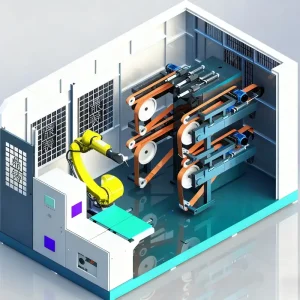
Modern automated polishing systems feature fully enclosed working chambers, integrated explosion-proof wet dust scrubbers, and strict spark containment frameworks that comply with international safety regulations like OSHA, ATEX, and CE.
A systematic technical overview of industrial material grinding and high-accuracy deburring architectures.
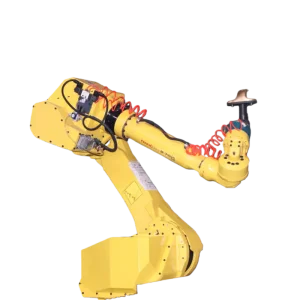
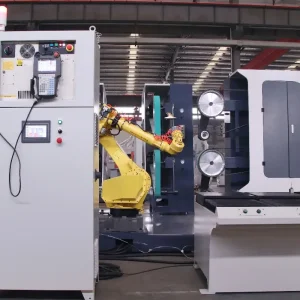
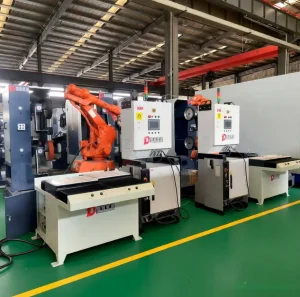
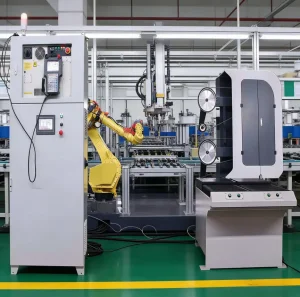
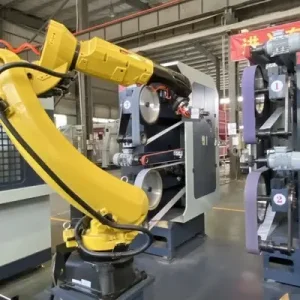
To implement an effective automation plan, structural designers must evaluate the entire material processing cycle. A high-efficiency robotic polishing cell consists of several key elements working together in harmony: a rigid 6-axis articulated robot manipulator, an active or passive compliant tool holder, an abrasive media supply station (belts, wheels, brushes), a workpiece positioning fixture, and a centralized control system with offline programming (OLP) capability. The integration of 3D structured-light vision scanners allows the machine to adjust its path dynamically, compensating for variations in raw metal castings and irregular parting lines.
| Technology Layer | Key Implementation Parameters | Industrial Value & Performance Gains |
|---|---|---|
| Articulated Robotics | 6-Axis / 7-Axis robots, high payload capacity (50kg - 160kg) for rigid tool handling. | Multi-angle accessibility, wide work envelope, precise repeatability down to ±0.05 mm. |
| Active Compliance | Pneumatic or closed-loop piezoelectric force actuators maintaining a constant pressure (5N to 200N). | Eliminates manual errors, prevents over-grinding, protects workpiece contours, and extends tool life. |
| Abrasive Management | Automatic abrasive belt wear compensation, dynamic variable-speed spindles. | Consistently high surface quality from the first part to the last; reduces tooling downtime by 40%. |
| Control Systems | Offline Programming (OLP), CAD-to-Path generation, real-time industrial Ethernet (EtherCAT). | Drastically cuts programming time for high-mix low-volume production runs. |

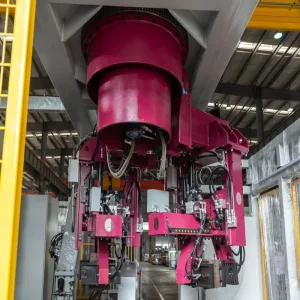
Xiamen DingZhu (DZ) Intelligent Equipment Co., Ltd, founded in 2016, is a premier high-tech enterprise dedicated to the research, development, and manufacture of advanced automated foundry and finishing machinery. Our extensive industrial portfolio features state-of-the-art automatic core shooting systems, high-rigidity gravity die casting units, automated Low Pressure Die Casting machines (LPDC), and intelligent robotic cell grinding and polishing platforms.
We focus on supplying custom industrial solutions to high-demand manufacturing sectors, such as plumbing hardware, sanitary fittings, automotive chassis parts, aerospace castings, and industrial valves. Relying on advanced engineering design, strict raw material selection, and rigorous quality control protocols, we serve manufacturing companies in over 80 countries, enabling our clients to achieve high production efficiency and transition smoothly to smart automation.
How we ensure continuous production uptime, reliable product quality, and long-term economic returns for our global clients.

Drawing on 20 years of research and industrial manufacturing experience, our machines use field-proven components, maintaining a lower failure rate than the industry standard.

Our core engineering team has focused on metal casting, robotic grinding, and polishing for over two decades, offering expert guidance from initial selection to process optimization.

With local service offices in India, Egypt, Turkey, and Iran, our support teams guarantee rapid on-site troubleshooting and engineering response within 24 hours.

Our localized spare parts inventory houses over 80% of critical wear items, enabling fast regional replacement and reducing emergency down-time by up to 60%.
Engineered to handle tough tasks in high-precision casting fields and consumer-facing metal industries.
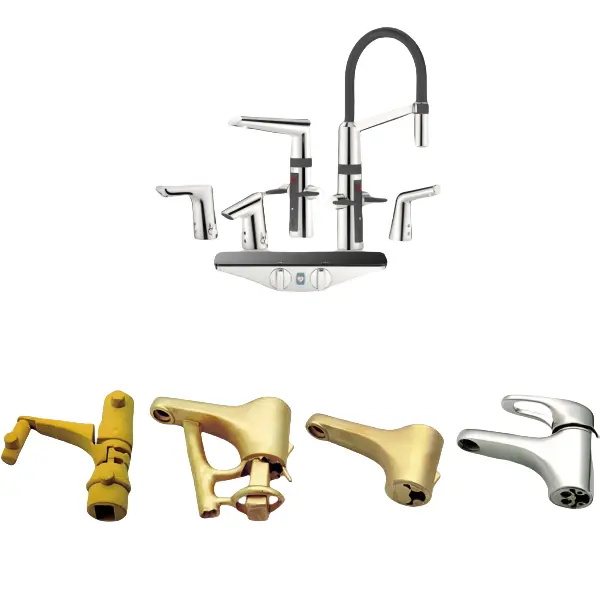
Automated grinding of complex kitchen and bathroom brass faucets, zinc fixtures, and copper valves, achieving excellent outer finishes prior to electroplating.
Read Technical Case →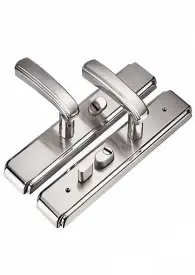
High-speed polishing of flat and contoured metallic surfaces, including stainless steel door handles, decorative panels, and structural hardware assemblies.
Read Technical Case →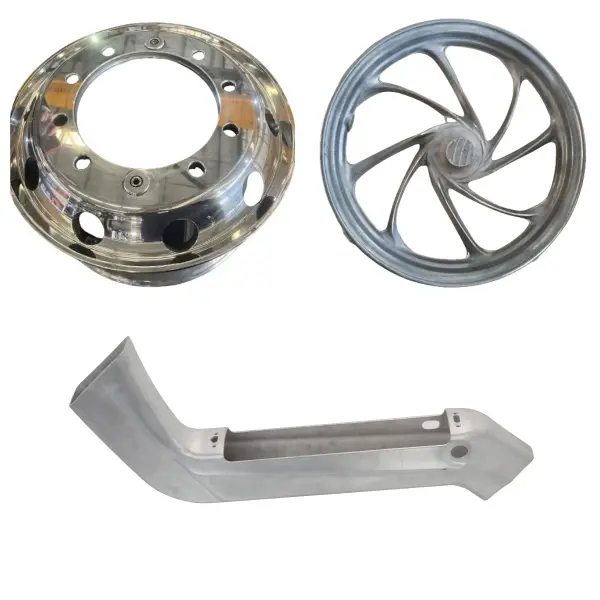
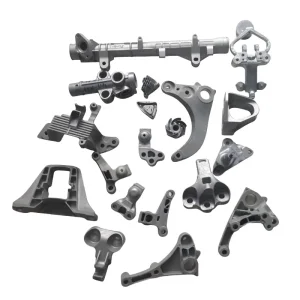
Precise deburring of aluminum engine heads, wheel rims, steering housing, and gearboxes. High structural integrity and dimensional tolerance guarantee.
Read Technical Case →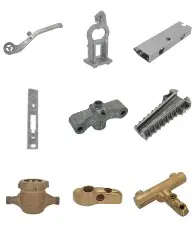
Rugged grinding systems engineered to remove thick riser blocks and heavy parting lines from carbon steel castings, iron pumps, and valves.
Read Technical Case →A structured technical breakdown to assist foundry directors and production managers in configuring the ideal machine cell.
Choosing the correct equipment configuration depends on several variables: part complexity, volume, material type, and the desired surface finish. The table below lists recommended technical systems based on these criteria.
| Metal Alloy Type | Common Surface Defects | Recommended Polishing Setup | Target Finish Level |
|---|---|---|---|
| Stainless Steel (Faucet/Valve) | Pores, parting line flashes, micro-cracks | Multi-axis robotic belt grinder + dynamic sisal wheel unit | Mirror-like finish (Ra < 0.15 μm) |
| Brass & Copper Alloys | Oxide layers, gating stubs, rough edges | Articulated polishing robot equipped with active compliance tool holders | Smooth base for electroplating (Ra 0.2 - 0.4 μm) |
| Aluminum & Zinc Castings | Flashes, sand-burn inclusions, raw surface crust | High-yield CNC robotic grinding platform with dust extraction | Fine tactile touch (Ra < 0.6 μm) |
| Gray Iron & Carbon Steel | Heavy gate scars, massive parting lines | Heavy-duty high-torque robot cell with pneumatic chipping hammers and carbide burrs | Dimensional tolerance prep (Ra < 1.6 μm) |
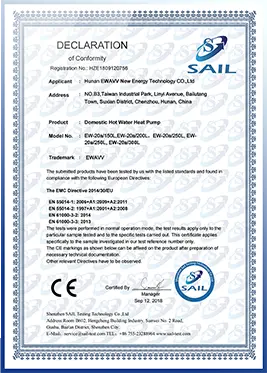
Our manufacturing and assembly lines operate under strict international quality guidelines, ensuring durable, reliable, and compliant machinery.
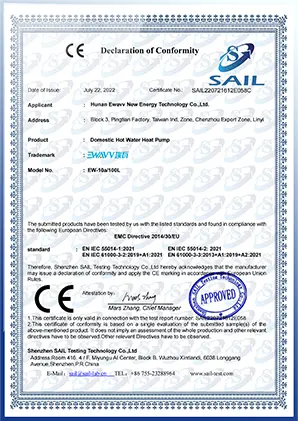
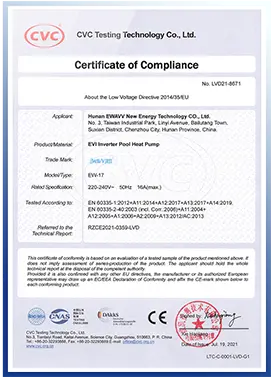
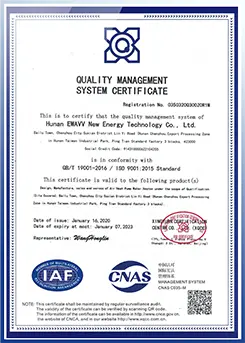
Read in-depth technical explanations regarding the operation, safety compliance, and ROI of our robotic polishing cells.
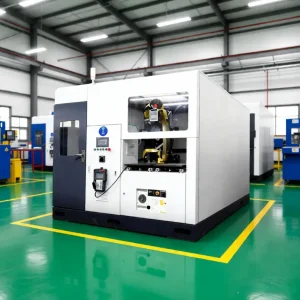
Explore our highly integrated automatic casting, robotic grinding, and specialty surface polishing equipment.
Partner with Xiamen DingZhu (DZ) Intelligent Equipment. We optimize your casting, deburring, and polishing pipelines to help you gain competitive edge.
Query project quotation Dingzhu auto