Explore our elite selection of high-efficiency robotic cells, deburring machines, and automated casting equipment engineered to optimize cycle times and deliver pristine surface finishes.
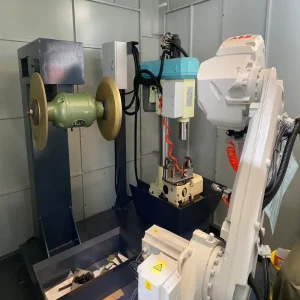
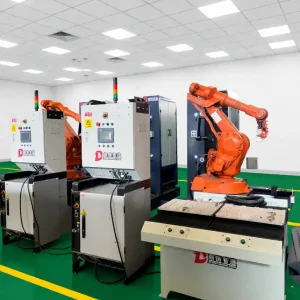
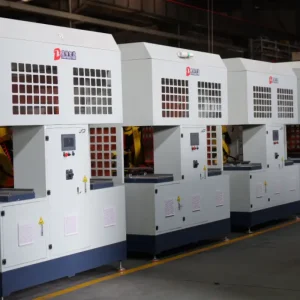
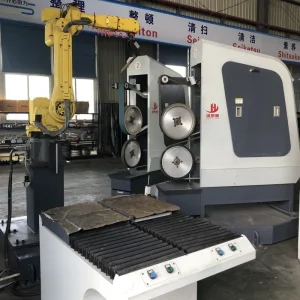
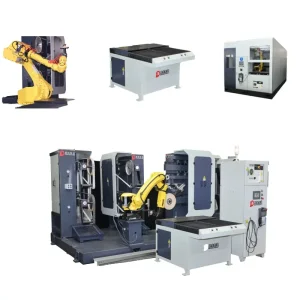
For decades, the foundry and metal finishing industries relied heavily on manual labor to perform grinding, deburring, and polishing operations. However, manual surface treatment is plagued by extreme inconsistencies, high workplace injury rates due to ergonomic hazards and particulate inhalation, and astronomical operational costs. As regulatory bodies worldwide enforce stricter occupational health and safety standards, manufacturing enterprises are compelled to transition to automated solutions.
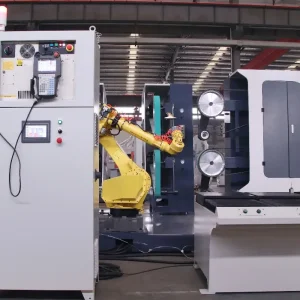
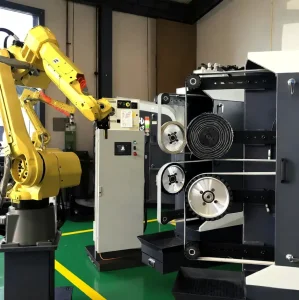
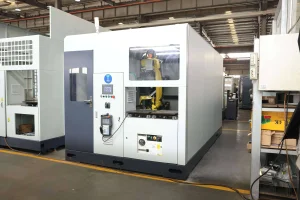
Unlike basic, static automation setups, modern robotic polishing and grinding systems integrate dynamic force feedback sensors (Active Contact Flange technology). This allows the robotic arm to detect and adjust its applied force in real-time (often within milliseconds), compensating for casting irregularities, wear on abrasives, and minor part misalignments. This level of precise adaptability is virtually impossible for manual operators to sustain over an 8-hour shift.
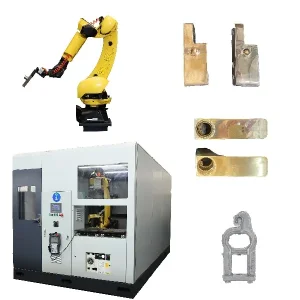
Furthermore, automated robotic cells dramatically elevate production throughput. By utilizing multi-axis configurations—typically integrating 6-axis industrial manipulators with dynamic rotary positioners—the robot can access intricate profiles, internal cavities, and complex curves on parts like sanitary faucets, door handles, and engine components. This versatility optimizes production cycles from hours to minutes, reducing the cost-per-part while elevating quality standards to a level that satisfies the most stringent aerospace and automotive requirements.
Founded in 2016, Xiamen DingZhu (DZ) Intelligent Equipment Co., Ltd has established itself as an authoritative leader in the research, development, and high-end manufacture of automated foundry and surface finishing systems. Specializing in plumbing hardware, sanitary fixtures, automotive components, and industrial valves, we offer an exhaustive array of machinery engineered to redefine industrial capability.
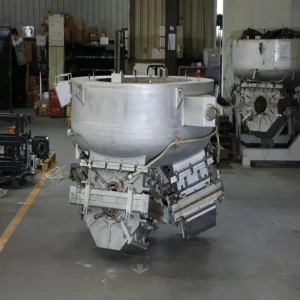
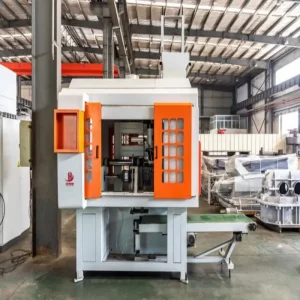
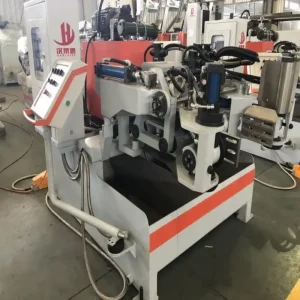
Our comprehensive product ecosystem encompasses state-of-the-art gravity die casting machines, robust low-pressure die casting (LPDC) equipment, automatic sand core shooting systems, and high-performance robotic polishing and grinding cells. Our holistic approach means we don’t just supply machinery; we deliver complete turnkey engineering solutions designed to seamlessly integrate into your smart manufacturing framework.
Our manufacturing facilities in Xiamen leverage China's unparalleled industrial ecosystem. We source high-grade raw castings, precision linear guides, and state-of-the-art electronic components locally from top-tier suppliers. This tight geographical concentration reduces lead times and logistics costs, allowing us to pass significant financial savings directly to our global clientele.
Backed by more than 20 years of technical expertise among our core engineering team, we execute rapid prototyping and product cycles. Whether you require custom PLC-programmed cells for unique metal door handle designs or tailored automated gravity die casting machinery for automotive components, our engineers configure, test, and ship specialized solutions in record time.
Every single robotic polishing and grinding unit undergoes meticulous multi-point verification before leaving our assembly floor. We run complete load simulations, analyze path-repeatability using laser interferometers, and execute trial finishes on client-supplied castings. This guarantee of operational readiness ensures rapid deployment and minimal downtime upon arrival.
Sourcing high-end machinery from a global partner requires a detailed understanding of hardware, software, and electrical integrations. Standardizing procurement protocols ensures seamless interoperability with pre-existing facility systems. Procurement officers must pay close attention to several foundational parameters:
Industrial environments present severe electrical hazards. When deploying machines internationally, products must comply with regional power frequencies (e.g., 380V/50Hz in China, 480V/60Hz in North America). Our systems utilize premier, internationally certified electrical components (e.g., Siemens PLC, Schneider electrics, ABB or Kuka robotic arms) and offer configuration options designed to comply with local certifications such as CE (Europe), UL (North America), and EAC (Eurasia).
Industry 4.0 requires modern factory systems to communicate via open standard protocols. Xiamen DingZhu's automated systems support leading protocols such as OPC UA, Modbus TCP, and Ethernet/IP. This enables seamless connection to factory MES (Manufacturing Execution Systems) and SCADA systems for real-time monitoring, predictive maintenance tracking, and productivity diagnostics.
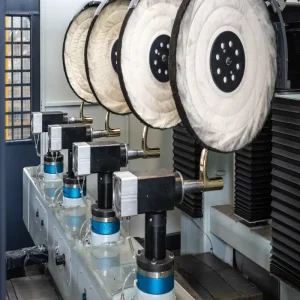
Grinding and polishing generate explosive dust particles, particularly when handling aluminum and zinc castings. Global buyers must guarantee that their machinery incorporates robust wet-type dust extractors or heavy-duty spark-containment ventilation systems. Additionally, tool-changing spindles must be compatible with standard industrial abrasives (sanding belts, flap wheels, sisal wheels) to avoid reliance on proprietary tooling, thus minimizing long-term operational expenditures.
We operate fully staffed, localized service nodes across critical manufacturing regions, including **India, Egypt, Turkey, and Iran**. These nodes provide rapid-response on-site troubleshooting within 24 hours, ensuring that language barriers and time zone differences never hinder your factory's productivity.
Our strategic overseas parts warehouses hold more than 80% of critical wear-and-tear items (belts, contact wheels, sensors, spindles). By establishing local spare-parts hubs, we reduce international shipping delays to zero, enhancing maintenance efficiency by up to 60% compared to traditional OEM suppliers.
We provide structured virtual and on-site operator certification courses. Our training program covers everything from basic robotic path teaching and safety boundaries to specialized force control programming, empowering your local team with deep self-sufficiency.
Different materials and product profiles present unique challenges in abrasive grinding and polishing. Xiamen DingZhu has engineered system solutions precisely tailored to these critical industries.
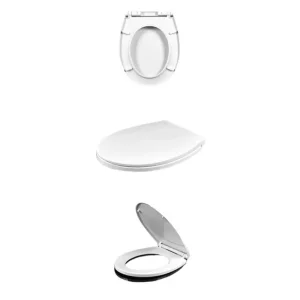
Faucets, valves, and water mixers require pristine, mirror-like chrome finishes. Our robotic cells excel at removing parting lines and minor casting blemishes from brass, bronze, and zinc alloy castings prior to electroplating, ensuring flawless surface plating without dimensional deviations.
High-volume door handle panels, escutcheons, and lock bodies necessitate highly repeatable, crisp brushed or satin textures. Our multi-station automatic systems utilize specialized PLC controls to deliver consistent directional finishes across variable geometry contours.
Automotive parts, truck wheels, and camshafts demand structural integrity and tight dimensional tolerances. Our heavy-duty robotic grinding units perform rapid gate removal, flash trimming, and parting-line grinding on tough aluminum and ductile iron castings with speed and precision.
The automated surface finishing sector is evolving rapidly. To maintain competitive relevance, enterprises must watch three core technology vectors:
Traditionally, teaching a robot how to follow a complex path required tedious manual manipulation of the teach pendant. Modern advancements utilize 3D laser scanners and advanced offline programming software. The system generates high-fidelity point clouds of the workpiece, automatically identifies deviation zones, and programs the toolpath within a digital sandbox, reducing offline programming time from days to minutes.
Environmental, Social, and Governance (ESG) mandates are driving industrial engineers to design systems that minimize electricity consumption and extend abrasive media life. Advanced software modules dynamically adjust spindle speeds based on material hardness, maximizing the working life of polishing discs by up to 40% and minimizing raw particulate pollution in factory environments.
A1: We integrate state-of-the-art active force control feedback mechanisms (often called constant force-feedback devices). As the robotic manipulator moves along the part's path, the sensor dynamically registers even the slightest fluctuations in mechanical resistance. The system automatically adjusts its pneumatic/electric actuator position to exert a highly uniform contact force, compensating for dimensional tolerances and ensuring that every single workpiece gets polished to identical parameters.
A2: Absolutely. Our software PLC systems allow operators to pre-program distinct processing profiles for different materials, including stainless steel, brass, zinc alloy, and aluminum. The machine can automatically change its rotational speed, contact pressure, and even swap grinding wheels or belts using an integrated automatic tool changer (ATC).
A3: Safety is our core priority. Our automated cells can be fully enclosed with explosion-proof Lexan or tempered glass partitions, keeping human operators completely isolated from the work zone. In addition, we design and integrate wet dust extraction ducts, explosion-proof extraction fans, and spark dampening chambers that fully comply with ATEX and OSHA industrial hygiene rules.
A4: We work primarily under standard international terms such as FOB, CIF, or DDP. Payments are generally structured around Milestone achievements (T/T or L/C at sight). Once your machine arrives, our local team coordinates the layout, supervises structural assembly, installs electrical routing, and executes local validation tests alongside your QA staff.
A5: Our control panels feature modern industrial communications protocols, including Modbus TCP, PROFINET, and OPC UA. Your centralized operations console can pull live telemetry such as motor spindle temperatures, power consumption, cycling times, error logs, and productivity numbers directly from the machine's PLC for analysis.
A6: Most clients achieve full ROI within **12 to 18 months**. This is achieved through a combination of a 70% reduction in manual labor costs, a drastic drop in product rejection rates (often falling below 1%), a 60% boost in overall plant productivity, and significant savings on consumable abrasives due to optimized, pressure-controlled polishing paths.
Browse our specialized industrial core shooting systems, precision camshaft grinders, and high-capacity gravity casting machines built for lasting industrial performance.
Connect directly with our senior process engineers. We provide comprehensive cycle-time assessments, localized compliance reviews, custom tooling profiles, and detailed project estimates designed for your manufacturing goals.
Query Project Quotation → Dingzhu auto