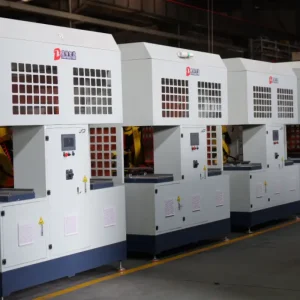
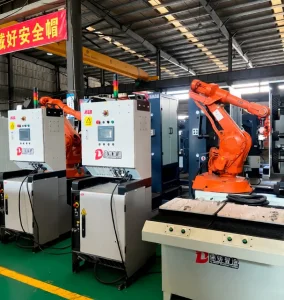
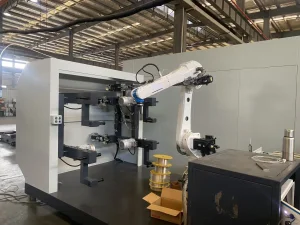
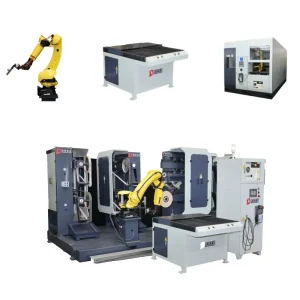
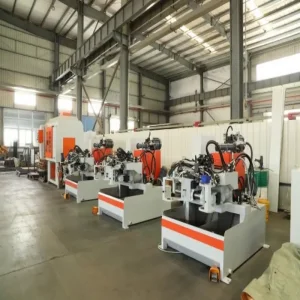
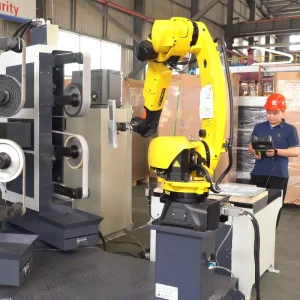
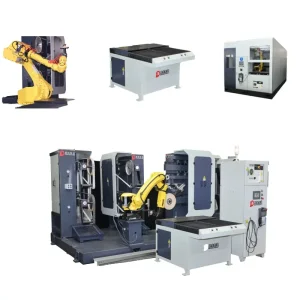
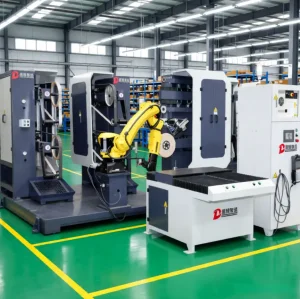
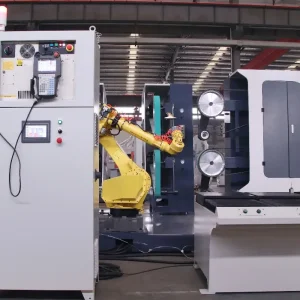
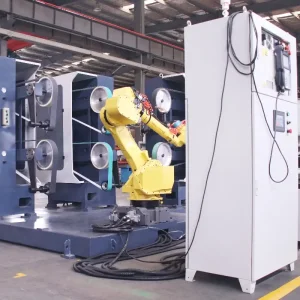
Explore our premium automated cells, heavy-duty grinders, and intelligent surface-treatment equipment engineered for the modern high-precision B2B foundry.
The global manufacturing ecosystem is witnessing an unprecedented paradigm shift in post-cast metal processing. Traditionally, casting finishing operations—encompassing degating, deflashing, deburring, riser removal, and fine polishing—were heavily reliant on manual labor. Handheld grinders and manually operated belt sanders were standard in foundries worldwide. However, this outdated approach presents critical challenges: high labor turnover, severe respiratory health risks (such as silicosis), high scrap rates due to human inconsistency, and rapidly escalating operational costs.
Today's leading global enterprises across automotive, aerospace, sanitary hardware, and heavy machinery are demanding absolute precision. Modern casting designs feature increasingly intricate geometries, and metallurgical advances demand perfectly uniform surface stress distribution. Automated casting finishing systems—leveraging multi-axis industrial robots, integrated active force feedback, and cutting-edge vision inspection—have emerged as the definitive solution. By replacing manual workflows, automated cells deliver deterministic, repeatable surface finishes, achieving zero-defect quality control.
For global procurement leaders, transitioning to automated casting finishing is no longer a long-term luxury; it is a critical immediate competitive imperative. High-reliability industries like Electric Vehicle (EV) manufacturing and precision valve engineering require tolerances that human operators simply cannot achieve at scale.

Xiamen DingZhu (DZ) Intelligent Equipment Co., Ltd is a globally recognized engineering powerhouse driving next-generation smart foundry equipment.
Founded in 2016, Xiamen DingZhu (DZ) Intelligent Equipment Co., Ltd was established with a singular, disruptive mission: to revolutionize the traditional foundry industry with robust, automated high-precision equipment. We are principal pioneers in the research, development, and high-capacity manufacture of automated machinery deployed in plumbing hardware, sanitary fittings, automotive spare parts, industrial valves, and aerospace sectors.
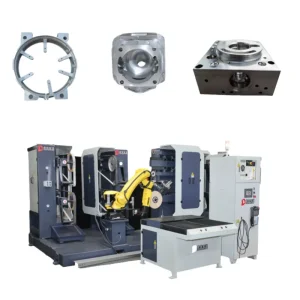
Our comprehensive, vertically integrated product portfolio includes advanced automatic core shooting machines, gravity die casting machines, automated Low Pressure Die Casting machines (LPDC), and state-of-the-art robotic cell grinding and polishing machines. By integrating mechanical engineering, soft-robotics force control, and intuitive operating interfaces, we empower global factories to transition seamlessly to automated smart manufacturing.
China's rise as a dominant supplier of automated casting finishing machinery is driven by structural, technological, and supply-chain efficiencies. While European and North American B2B brands have historically provided automation options, they often carry prohibitive capital expenditure profiles and long lead times. Chinese manufacturers, exemplified by Xiamen DingZhu, have pioneered a highly efficient, agile integration paradigm.
China houses the world's most dense cluster of industrial component suppliers. From high-grade linear guideways and heavy-duty structural steel frames to pneumatic systems, Chinese automation developers operate within highly localized ecosystems. This geographical consolidation minimizes shipping times for materials, supports ultra-fast iterative engineering, and drives manufacturing overhead costs down significantly. Consequently, global buyers receive world-class components integrated into state-of-the-art robotic grinding cells at a highly optimized price point.
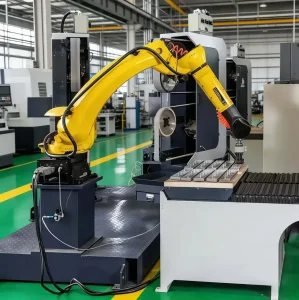
Chinese engineers have successfully bridged the gap in core robotics software. By incorporating premium force-control sensors (like multi-axis load cells) and developing adaptive path-planning algorithms, Chinese automated finishing machines can dynamically compensate for casting variations in real-time. Instead of strictly rigid paths that can gouge or under-grind castings, our machines use "floating" grinding spindles and real-time feedback loops. This ensures a consistent, high-quality surface finish despite minor casting dimensional variances.
Unlike rigid Western system integrators who favor highly standardized, non-negotiable modular designs, Chinese manufacturers offer immense custom-engineering flexibility. Whether your factory layout demands a custom footprints, automated conveyor integration, or a unique dual-arm cooperative workcell to clean heavy commercial engine blocks, Xiamen DingZhu provides tailored engineering support. Our rapid design cycle ensures your custom automation cell goes from concept to physical commission in weeks, not months.
Engineered to deliver exceptional operational reliability, long equipment lifespan, and global responsive support.
Backed by over 20 years of research and industrial validation, our equipment utilizes proven, market-tested technical solutions, achieving a field failure rate significantly lower than the global industry average.
Our veteran engineering team has focused exclusively on casting, grinding, and polishing automation for over two decades. We provide continuous support from custom design selection to long-term workflow optimization.
We maintain regional service hubs and localized field networks in India, Egypt, Turkey, Iran, and other industrial clusters, guaranteeing on-site expert technician dispatch within 24 hours of request.
Our localized global depots stock over 80% of common wear items, enabling rapid "zero-waiting" emergency parts replacement that improves long-term maintenance cycles by 60%.
Industrial buyers, factory owners, and procurement directors evaluating automated casting finishing manufacturers must focus on several core metrics to ensure long-term ROI. A high-performing automated casting grinder is more than a standard industrial robot; it is a complex, high-stress system that operates in extremely harsh, dusty environments.
Foundry finishing shops are notorious for ambient metal dust, abrasive grit, and heat. Standard industrial robots will fail rapidly without specialized engineering protections. A certified system must feature high-IP rated enclosures (typically IP65 or IP67 for the wrist and primary joints) alongside positive air pressure purging to prevent micro-particulate infiltration into the gears, bearings, and encoders.
Raw castings contain dimensional deviations due to mold wear, cooling contraction, and varying gate sizes. Rigid programming paths are prone to overloading the spindle motor or removing too much parent material. Top-tier systems feature active or passive compliance mechanisms. Passive compliance tools use pneumatic pressure regulators, while active compliance systems employ load cells and high-speed CPU control loops to adjust robotic paths on the fly. This guarantees a uniform finishing depth regardless of casting variation.
High-mix, low-volume manufacturers require fast job changeovers. The software and Human-Machine Interface (HMI) must support rapid programming and intuitive calibration. Offline programming software (OLP) with visual simulation allows operators to generate new finishing paths from CAD files without stopping active production. Similarly, quick-change pneumatic clamping fixtures allow operators to switch casting models within minutes.
Providing custom, high-precision automated solutions across diverse manufacturing applications globally.

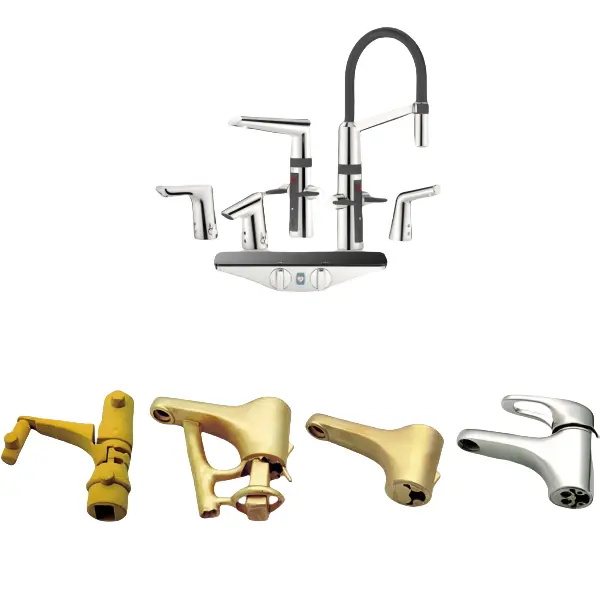
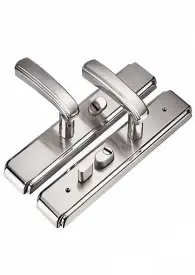
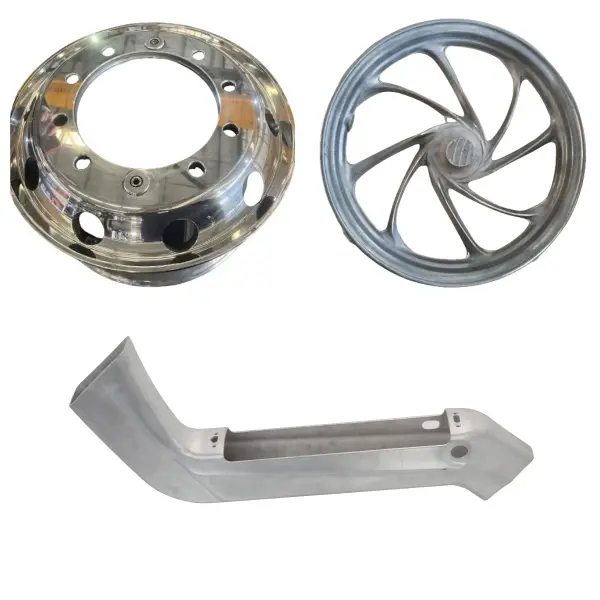
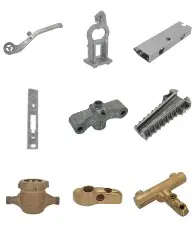
As industrial automation matures, several breakthrough technologies are shaping the future of post-cast processing. Sourcing managers and system architects must stay informed of these shifts to ensure newly purchased equipment remains relevant and highly competitive for the next 10–15 years.
Traditional automated cells rely on precise physical fixturing to ensure the casting matches the programmed robotic coordinates. Modern high-tier lines are shifting to 3D vision guidance. High-resolution structured light cameras scan incoming castings on a conveyor, dynamically calculating their spatial coordinates and passing the spatial offset data directly to the robotic controller. This completely eliminates the need for expensive, dedicated physical fixturing, making high-mix, low-volume automation exceptionally profitable.
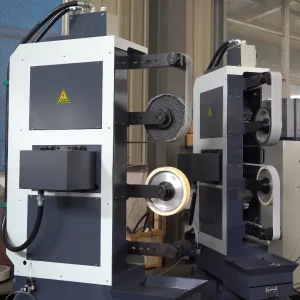
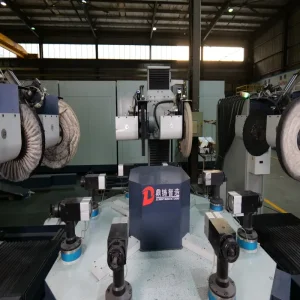
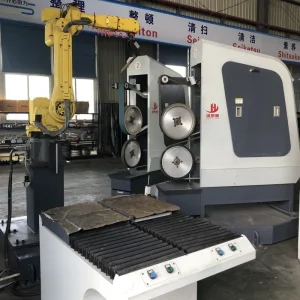
Advanced casting designs require multiple types of abrasive media. A raw casting might need a heavy-duty grinding wheel to remove a large gating structure, followed by an abrasive belt sander for primary draft lines, and a wire brush or scotch-brite wheel for final satin deburring. The trend is moving toward consolidated, hybrid-tool robotic cells. These systems either utilize automated end-effector tool changers or position multiple grinding spindles around a central workholding robot to complete all post-cast treatments in a single, high-efficiency cycle.
Through Industrial Internet of Things (IIoT) protocols, modern robotic grinders constantly monitor crucial health metrics: spindle temperature, vibration frequency, motor current draw, and abrasive belt tension. Using edge computing, these systems can predict tool failures or identify when an abrasive belt has degraded past its optimal grinding coefficient. This prevents sudden machine downtime, optimizes consumable utilization, and ensures completely uniform surface quality.
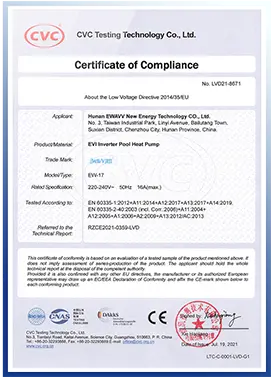
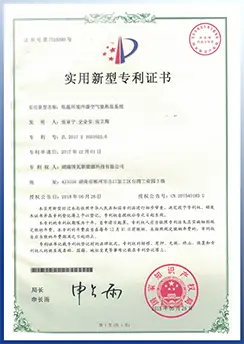
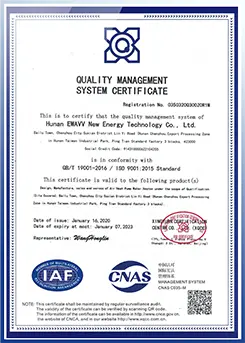
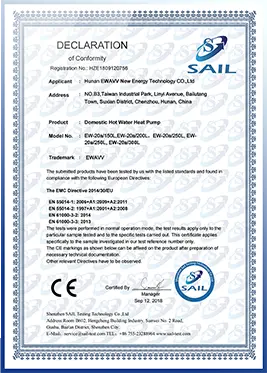
Our commitment to rigorous design, manufacturing, and environmental standards is validated by global industrial certifications.
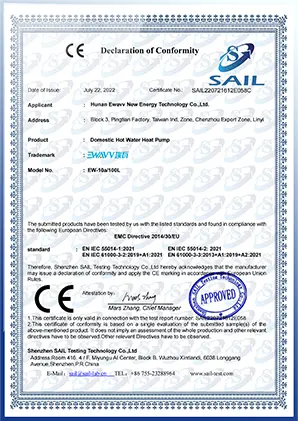
Addressing critical engineering questions from global sourcing managers, process leads, and foundry operators.
Heavy-duty automation, CE-Certified polishing stations, gravity casting machines, and multi-manipulator systems.
Let us optimize your production efficiency with exclusive equipment solutions to help you seize the dual high ground of quality and efficiency in global competition. Reach out to our application engineers for a custom workflow assessment and project proposal.
Query Project Quotation Dingzhu auto