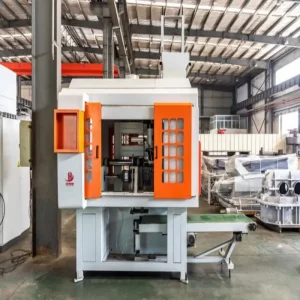
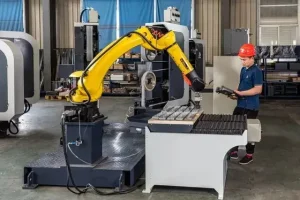
Premium precision manufacturing platforms designed for low-pressure casting, robust gravity die casting, and automated finishing.
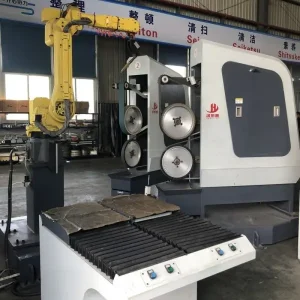
An Analytical Outlook on Industrial Transformation, Geopolitical Re-shoring, and Safety Regulation Compliance
In modern industrial manufacturing, casting preparation and post-pour surface treatment processes have undergone a structural paradigm shift. Historically characterized as manual, high-labor-intensity operations, the grinding, deburring, and polishing of complex metallic geometries are rapidly transforming into highly standardized, automated engineering disciplines. Driven by strict international regulations regarding occupational health (such as silica and metal dust exposure thresholds) and the rising demand for absolute dimensional repeatability in high-performance sectors, manual grinding is no longer viable for high-growth enterprises.
Information Gain Insight: According to global foundry data, moving from manual deburring to robotic cell systems reduces defective rates from approximately 8.5% down to under 0.2%. This transition directly addresses the occupational safety challenges of metal dust inhalation, eliminating manual vibration fatigue while increasing throughput by up to 250%.
Furthermore, geographical industrial changes have accelerated the demand for smart, rugged foundry hardware. As manufacturing regions in North America, Western Europe, and parts of Asia reposition themselves toward high-margin, automated production structures, casting polishing equipment must integrate seamlessly into smart factories. In this shifting environment, Chinese equipment manufacturers have transitioned from manufacturing basic mechanical configurations to providing unified, multi-axis robotic hardware solutions featuring integrated cloud monitoring and adaptive force feedback. DingZhu stands at the forefront of this industrial revolution, delivering engineering solutions that balance robust mechanical designs with advanced software controls.
Evaluating automated tooling pathways reveals the clear advantages of CNC and multi-axis robotic configurations over traditional finishing lines:
| Operation Mode | Material Removal Rate | Surface Finish (Roughness Ra) | Cycle Consistency | Safety Profile | Typical ROI Timeline |
|---|---|---|---|---|---|
| Manual Bench Grinding | Variable (Operator Dependent) | Ra 1.6 μm — 3.2 μm | Low (High variance over shifts) | Hazardous (Dust, Vibration, Noise) | N/A (Ongoing operational costs) |
| CNC Fixed-Station Grinding | High & Uniform | Ra 0.4 μm — 0.8 μm | Excellent (Programmed paths) | Enclosed Cabin (High safety) | 14 - 18 Months |
| Articulated Robotic Cells | Optimal (Adaptive force feedback) | Ra 0.1 μm — 0.4 μm | Maximum (Real-time wear compensation) | Fully Isolated (Zero operator contact) | 12 - 15 Months |
Xiamen DingZhu (DZ) Intelligent Equipment Co., Ltd. was founded in 2016 and is a leading developer and manufacturer of high-end automated foundry and finishing systems. We design, engineer, and commission turnkey production lines for plumbing hardware, sanitary fittings, automotive chassis components, motorcycle castings, and industrial valve bodies.
Our core product portfolio includes automatic core shooting machines, precision gravity die casting machines, automated Low Pressure Die Casting machines (LPDC), and custom-engineered robotic grinding and polishing cells. By integrating advanced kinematics with intuitive control software, we enable foundries globally to upgrade from labor-intensive setups to digitalized smart manufacturing hubs.


Unpacking the Architectural Parameters that Drive Industrial Precision
To implement automated surface finishing, it is essential to understand the mechanical forces and toolpaths required. Polishing casting alloys, such as copper-rich brass, structural aluminum, or zinc alloys, presents unique challenges because of their distinct thermal and physical profiles. High-speed grinding generates intense friction and heat, which can lead to micro-structural changes, tool clogging, or surface burning if the system lacks proper controls. Consequently, modern robotic polishing units do not rely on fixed path layouts. Instead, they incorporate intelligent adaptive control systems.
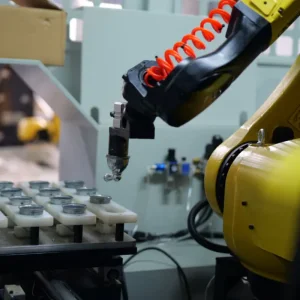
DingZhu's systems are built around Active Force Control (AFC) technologies. By mounting high-responsiveness multi-axis force/torque sensors between the robot flange and the abrasive tool, the system continuously measures normal contact forces at millisecond intervals. If a casting exhibits dimensional variances due to sand mold erosion or parting line shifts, the robot automatically adjusts its spatial position to maintain a constant pressure. This dynamic adjustment prevents common defects such as under-grinding or excessive material removal, keeping surface roughness consistently below Ra 0.2 μm across large production batches.
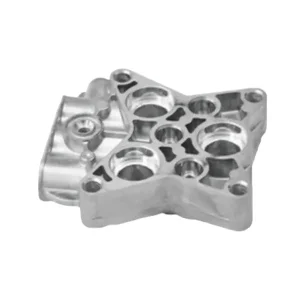
Engineering Highlight: For brass faucet castings and water pump housings, active force compensation ensures that complex contours and curved transitions maintain structural wall thickness within 0.05mm tolerances. This level of accuracy is critical for parts that undergo high-pressure hydrostatic testing.
Equally critical to the finishing process is sand core manufacturing. Modern core shooting machines from Xiamen DingZhu leverage multi-stage pneumatic shooting valves, ensuring homogeneous sand distribution and optimal core hardness. This process minimizes initial casting defects like veins and penetration, reducing the downstream deburring and grinding workload. These interconnected steps highlight how DingZhu's equipment acts as a unified system, where core quality directly enhances the efficiency of final surface polishing.
Our comprehensive machinery lineup addresses every phase of the casting, sand-molding, and automated polishing lifecycle:
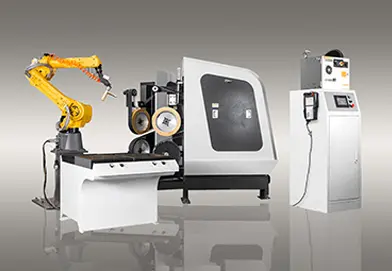
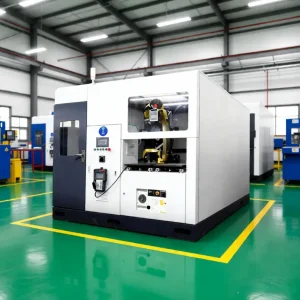
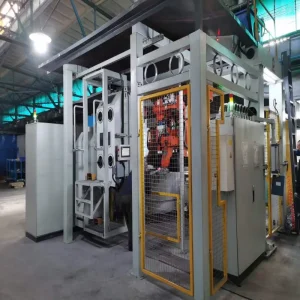
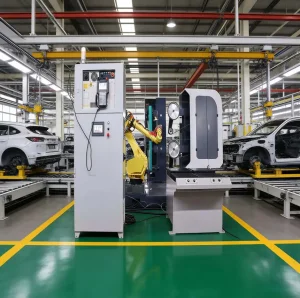
Heavy-duty industrial robotic finishing cells designed for continuous deburring operations.
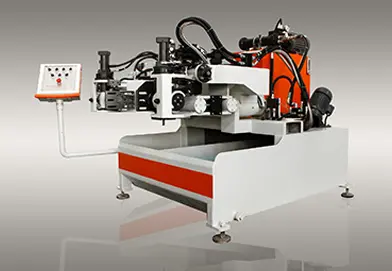
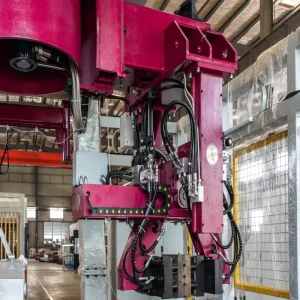
Robust casting systems featuring tilt-pour actions for high-density metallic components.
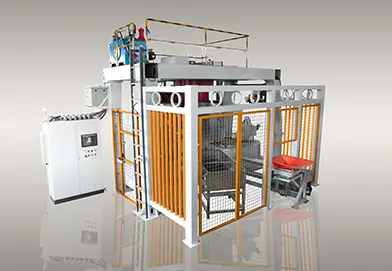
Integrated foundry machinery engineered for precise temperature control and automatic cycles.
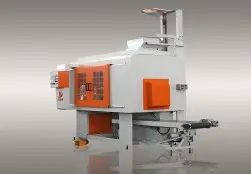
Pneumatic core-making equipment ensuring consistent density and precise geometric accuracy.
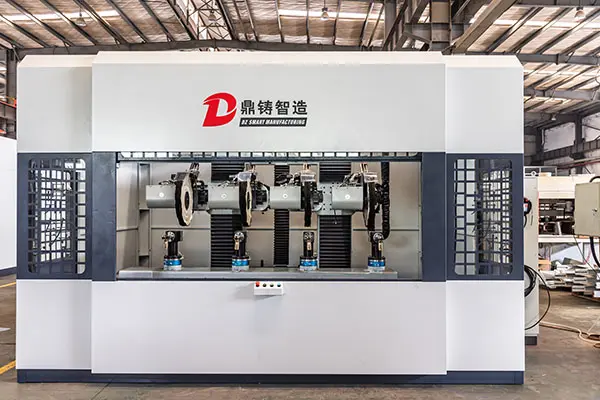
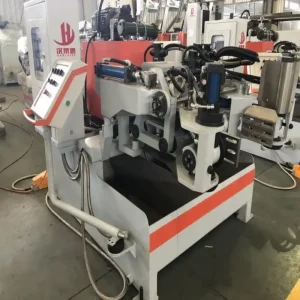
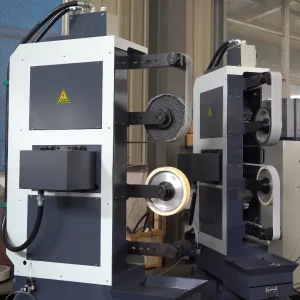
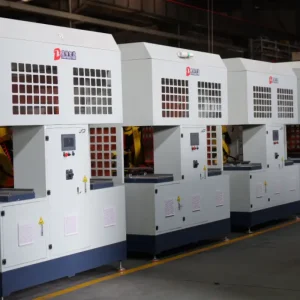
Multi-station automated surface treatment machinery optimized for plumbing fittings.
Discover why leading global manufacturers partner with DingZhu to transform their production capabilities.

Built on over 20 years of field-tested engineering expertise, our systems deliver high reliability with an average failure rate significantly below the industry benchmark.

Our senior engineering team provides comprehensive support throughout the equipment lifecycle, from initial system selection to advanced tooling and process integration.

With dedicated regional support hubs across Turkey, Egypt, India, and Iran, we ensure fast local assistance and aim to respond on-site within 24 hours.

Our localized spare parts centers stock key components, allowing for rapid replacements that reduce unscheduled downtime by up to 60%.
Innovations in Vision Systems, Intelligent Toolpaths, and Ecological Manufacturing Standards
As the industrial manufacturing landscape progresses toward Industry 4.0, casting finishing equipment is evolving past simple pre-programmed actions. The next generation of surface treatment systems integrates 3D Machine Vision Guidance and Artificial Intelligence. Traditional setups require operators to manually define robotic toolpaths for each component geometry, a process that can take hours or days. Modern smart systems utilize structured-light 3D scanners to capture the exact coordinates of each workpiece in real time, automatically generating optimal grinding paths.
This automated path generation is particularly useful for addressing casting variations. No two castings are identical; shifts in sand molds and variations in gate trimming often lead to slight geometric differences. 3D vision systems map these variations, allowing the robot to adjust its tool path dynamically. This capability ensures consistent deburring across complex surfaces and prevents structural damage, even on thin-walled die-cast components.
Future Trend Insight: Industry research shows that integrating 3D vision path generation with adaptive force feedback reduces programming time for new castings by up to 90%. This transition enables foundries to cost-effectively manage high-mix, low-volume production alongside high-volume runs.
In addition to automation, environmental and resource sustainability is shaping development roadmaps. High-speed grinding of alloys like brass, aluminum, and zinc produces fine metallic particles and dust, presenting both health hazards and explosion risks in enclosed plants. To address this, modern systems integrate sealed acoustic enclosures and specialized down-draft wet dust extraction units. These extractors capture fine particles at the source, mixing them with water to prevent airborne contamination. Furthermore, high-efficiency servomotors and regenerative braking systems are increasingly used to lower the overall energy consumption of robotic arms and casting units, supporting green manufacturing standards.
Our technology is designed for demanding industrial environments, ensuring precision across diverse applications:





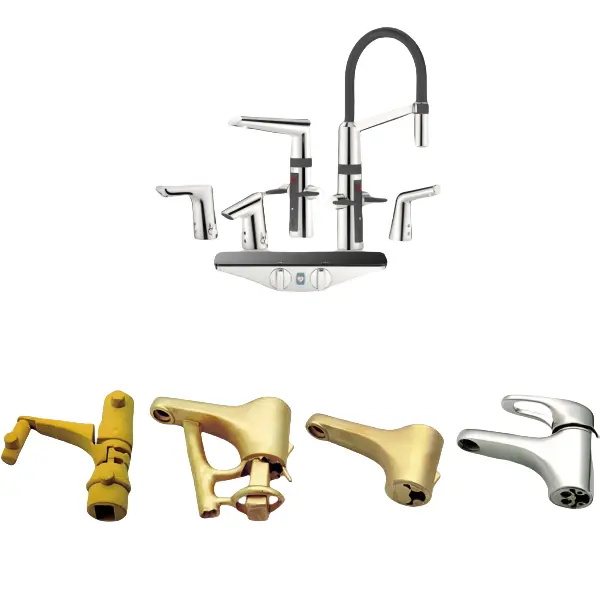
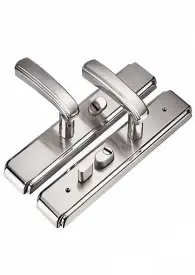
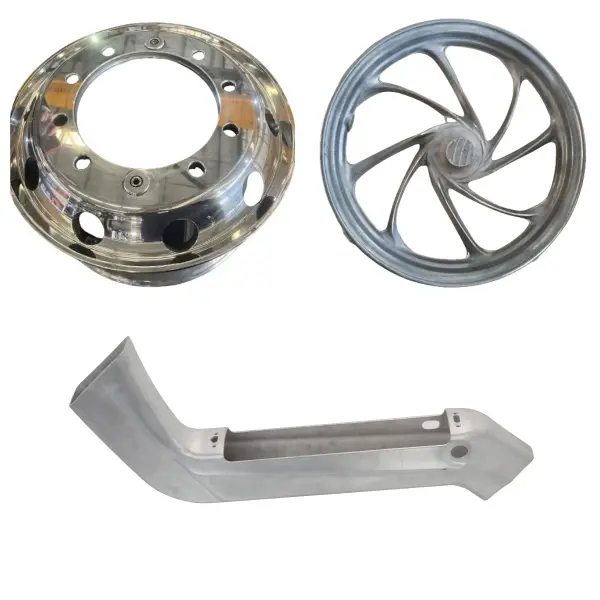
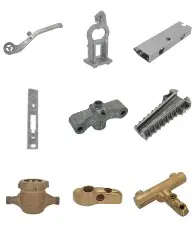
High-speed CNC polishing robots, low-pressure casting machinery, and heavy deburring workcells for global enterprises.
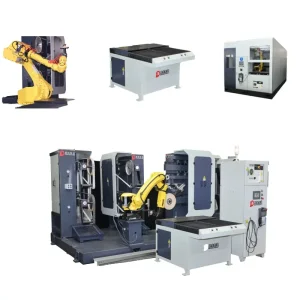
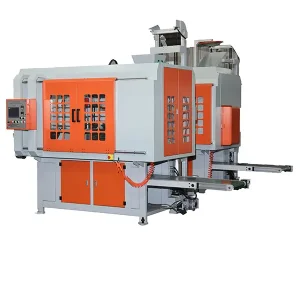
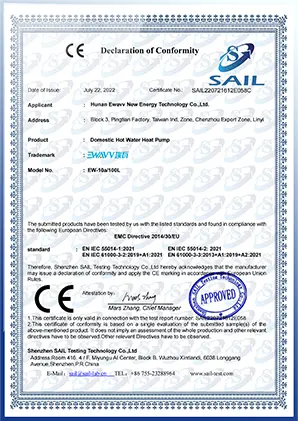
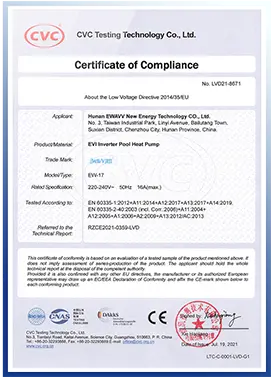
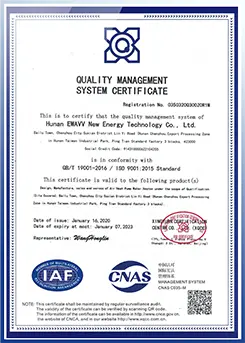
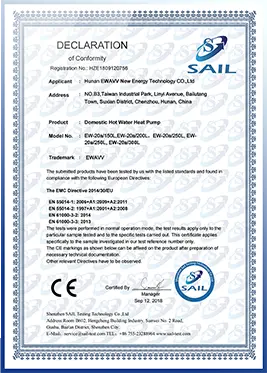
Certified manufacturing processes adhering to rigorous global safety and performance standards.
Expert technical insights addressing key challenges in automated casting, core shooting, and robotic polishing.
Partner with DingZhu to implement advanced automated casting, core shooting, and high-precision robotic polishing systems tailored to your operational requirements.
Request Technical Project Quotation Dingzhu auto