Explore our flagship portfolio of automated grinding, polishing, and casting machinery engineered for zero-defect output and maximum throughput.
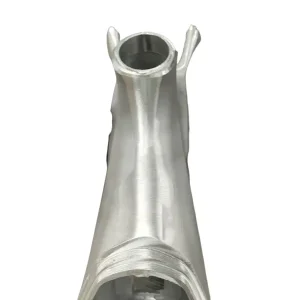
High-precision deburring and surface finishing systems engineered specifically for automotive battery aluminum castings.
Explore Technical Specs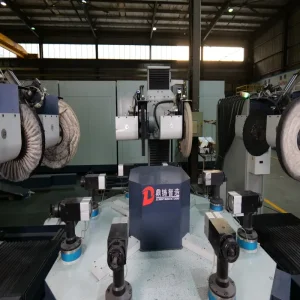
Synchronous four-manipulator architecture designed for multi-specification wheel polishing and high-speed cycle runs.
Explore Technical Specs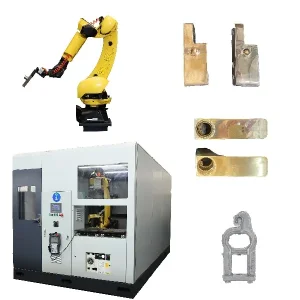
Comprehensive mirror-grade finishing solution built for casting separation, contour grinding, and gate cleaning.
Explore Technical Specs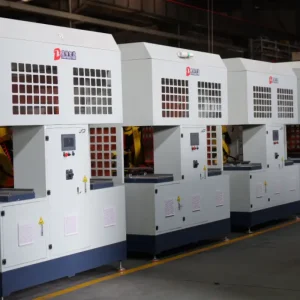
Heavy-duty edge treatment and surface cleaning station optimized for rigid structural steel and complex casting profiles.
Explore Technical Specs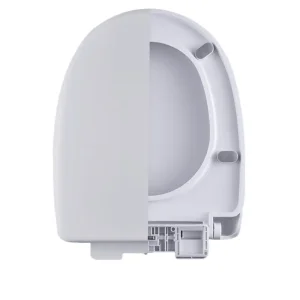
Advanced tactile-sensing robotic finishing cells engineered specifically for premium sanitary ware glaze preparation.
Explore Technical Specs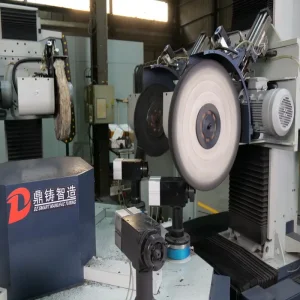
Adaptable multi-material rotary tables providing uniform abrasive coverage on composite, brass, and steel components.
Explore Technical Specs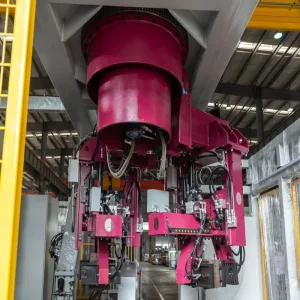
Low-Pressure Die Casting (LPDC) technology with multi-station control loops to maximize metal yield and structure density.
Explore Technical Specs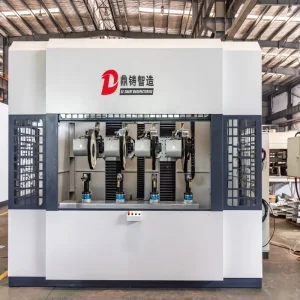
Continuous inline surface finishing workstation equipped with intelligent sensor arrays and fast-swap toolheads.
Explore Technical SpecsAnalyzing global procurement patterns, technology integration paradigms, and future directions for high-precision foundry post-processing.
In modern industrial manufacturing, traditional manual grinding, deburring, and polishing represent significant operational bottlenecks. Manual post-processing introduces structural inconsistency, high human-error margins, and significant safety hazards, exposing operators to toxic airborne metal dust. Transitioning to automatic surface finishing equipment represents an essential evolution for high-volume producers across the automotive, sanitary ware, aerospace, and defense industries.
High-end global buyers prioritize systems that deliver absolute structural replication. Robotic cells integrated with active force compliance sensors can dynamically adjust processing pressures. This active feedback ensures uniform material removal rates (MRR) without degrading the geometric tolerance profiles of the cast workpieces. By utilizing advanced algorithms, automatic polishing and grinding centers achieve a level of consistency that ensures every component complies with strict dimensional requirements, regardless of batch scale.
The global metal finishing landscape faces critical regulatory and economic changes. Escalating strictness of environmental, social, and governance (ESG) standards, alongside the continuous shortage of skilled abrasive technicians, challenges foundry operators to rapidly automate. However, automation is rarely a plug-and-play process. Success requires comprehensive integration with existing Enterprise Resource Planning (ERP) systems and Manufacturing Execution Systems (MES).
Founded in 2016, Xiamen DingZhu (DZ) Intelligent Equipment Co., Ltd. is a leading manufacturer specializing in the research, development, and high-volume export of automatic foundry and surface finishing systems. Located in Xiamen, China, our engineered solutions support critical global industrial operations, including plumbing hardware, high-end sanitary ware, automotive castings, precision valve components, and aerospace structures.
Our core capabilities span across the entire casting and finishing spectrum. We deliver automated core shooting machines, precision gravity die casting machines, high-efficiency automatic Low Pressure Die Casting (LPDC) centers, and state-of-the-art robotic grinding and polishing cells. By integrating robust robotic kinematics with custom PLC process automation, we empower global factories to transition from labor-intensive manual operations to high-efficiency, Industry 4.0-compliant production systems.


Built upon 20 years of continuous technological development. Our engineering assets undergo rigorous stress testing in real-world environments, resulting in an operational failure rate far below the industry average.

Our engineering team has focused on casting, grinding, and polishing systems for over two decades. We provide end-to-end design, simulation, commissioning, and optimization support customized to your production requirements.


From architectural hardware and complex sanitary fittings to high-load automotive chassis components.
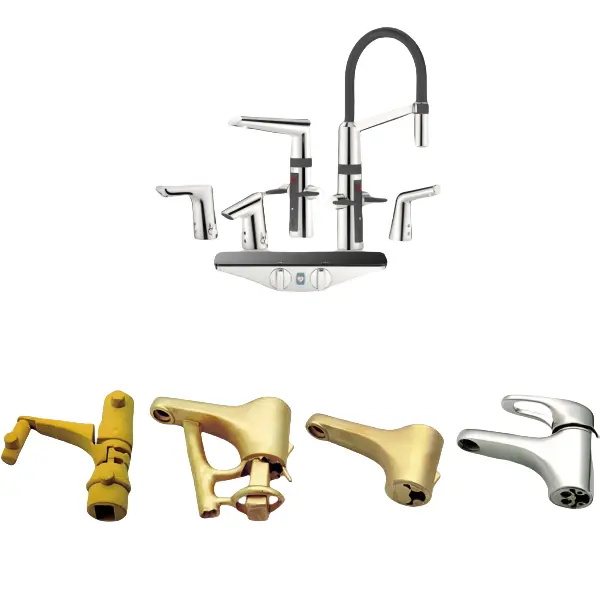
Achieving mirror-grade surface profiles (Ra < 0.2 microns) on high-grade brass faucets, valves, and water mixers before chrome electroplating.
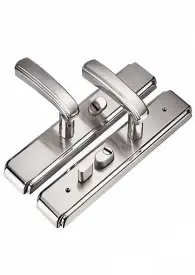
Fully automated deburring, edge blending, and finishing operations on complex door handle panels, architectural trim, and mechanical locks.
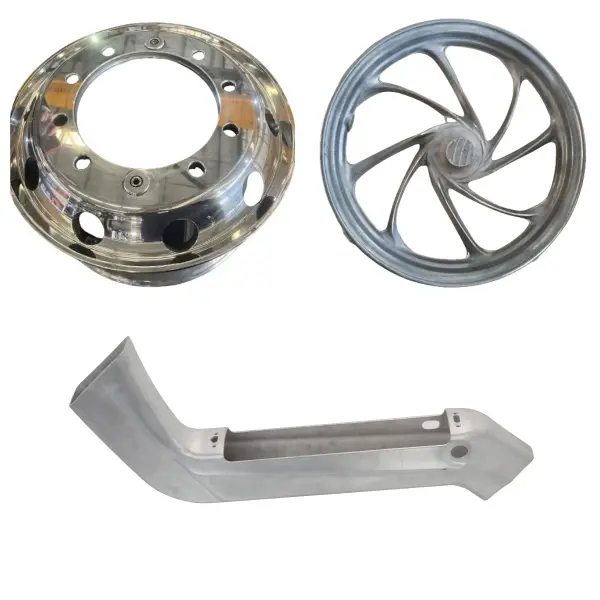
Structural deburring of critical automotive steering knuckles, engine blocks, battery boxes, and structural chassis castings under rigorous cycle conditions.
Insights into upcoming technological improvements and strategic systems integration designed for global procurement heads.
The next generation of automatic surface finishing equipment will rely heavily on close integration with high-definition machine vision and structured light 3D scanners. Traditional robotic path programming relies on fixed coordinate systems. However, real-world castings feature parting line inconsistencies and core shifting variations. By integrating real-time optical recognition, our future systems dynamically modify toolpaths on the fly, matching the unique geometry of each casting. This reduces scrap rates while ensuring optimal surface quality across complex features.
Industrial sustainability is a core factor in modern machinery design. Standard grinding and polishing setups consume large amounts of electrical energy and require frequent consumable replacements. DZ's development roadmap focuses on optimizing electric motor efficiency through variable-frequency drives (VFD) and intelligent power management systems. Additionally, by collecting and analyzing operational data, our systems calculate optimal wheel speeds and feed rates. This data-driven approach reduces energy consumption per unit by up to 22% while extending belt and buffing wheel life.
Maintaining a constant force is essential when polishing materials with varied hardness, such as aluminum and zinc alloys. Our latest equipment uses force-torque sensor arrays integrated with the robotic arm tool center point (TCP). When the robot meets a complex radius or irregular parting line, it adjusts pressure in milliseconds. This active compliance system prevents over-grinding, maintaining the structural integrity and dimensional tolerances of critical components.

To ensure continuous factory uptime, DZ maintains active localization hubs and service offices in strategic industrial regions including India, Egypt, Turkey, and Iran. We guarantee a swift 24-hour on-site response time to resolve mechanical or software issues, protecting your production targets from unexpected downtime.

Our international support hubs maintain well-stocked parts repositories. These local warehouses carry more than 80% of common wear parts, enabling fast replacements. This proactive inventory management reduces parts transit delays and improves troubleshooting efficiency by up to 60%.
Addressing the core technical, structural, and procurement questions raised by global plant managers and system engineers.
DZ machines feature active force-torque sensors and adaptive software compensation. If a casting batch displays small dimensional variances, the system adjusts tool pressure in real time. This keeps the material removal rate constant, ensuring all parts remain within print tolerances without manual intervention.
Yes, our systems are highly versatile. We program specific processing parameters—such as spindle speed, contact force, and cycle times—tailored to the metal being processed, whether it is brass, aluminum alloy, zinc alloy, or stainless steel. This prevents cross-contamination and ensures optimal surface quality for each material.
Our robotic cells are fully enclosed and comply with modern safety standards. They include integrated spark suppression systems, automatic explosion-proof dust collectors, interlocked access doors, and safety light curtains. These measures protect operators from harmful dust, high-speed debris, and accidental contact.
Our LPDC systems utilize advanced pressure control loops to ensure smooth, controlled mold filling. This minimizes turbulence, reduces air entrapment, and significantly lowers porosity in cast parts. The resulting castings feature high structural density and excellent surface finish right out of the mold.
We send experienced field engineers from our local service hubs to manage setup, system integration, and calibration. Additionally, we provide comprehensive operator training covering routine programming, daily maintenance, and troubleshooting to ensure your team can operate the system efficiently.
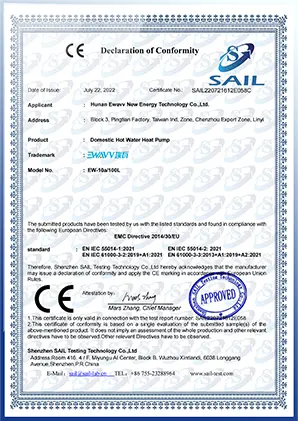
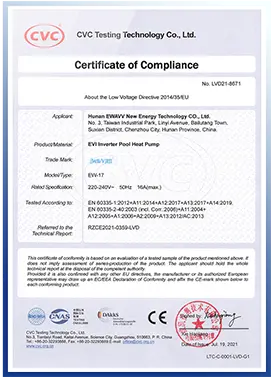
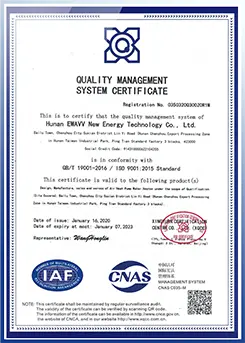
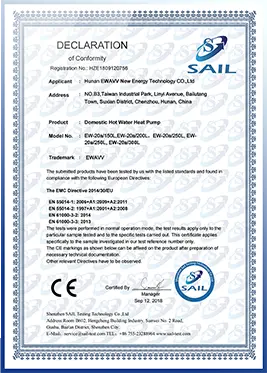
Our commitment to rigorous manufacturing standards and quality control is validated by respected international testing and certification bodies.
Advanced heavy-duty equipment built to streamline post-processing operations and maximize casting yield.
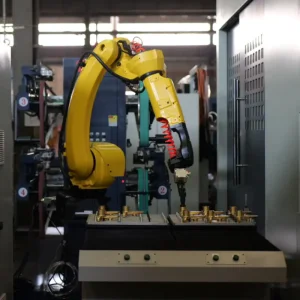
Fully integrated inline processing systems offering seamless handoffs between casting, cooling, and abrasive finishing stations.
Explore Technical Specs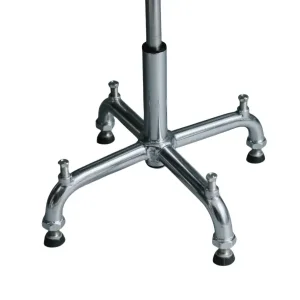
Custom workstations designed for grinding and polishing chair corners, table edges, and lamp fixtures.
Explore Technical Specs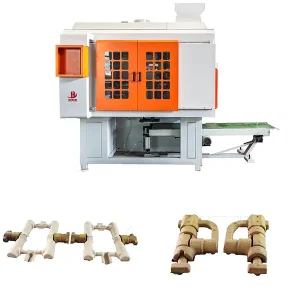
High-speed foundry core makers engineered for rapid cycles, uniform density, and compatibility with complex molds.
Explore Technical Specs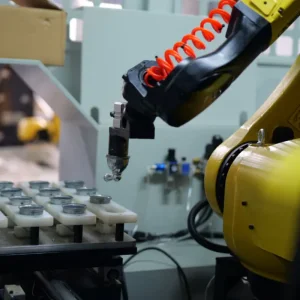
High-precision automated surface finishing systems equipped with coordinate-tracking software.
Explore Technical Specs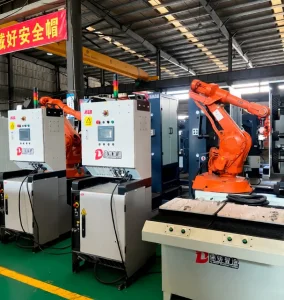
Built to handle heavy, large-scale industrial castings and structural steel with continuous duty cycles.
Explore Technical Specs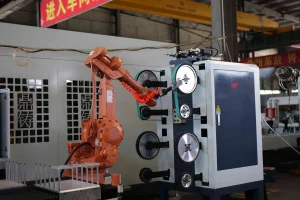
Versatile polishing systems optimized for stainless steel, zinc alloys, and aluminum extrusions.
Explore Technical Specs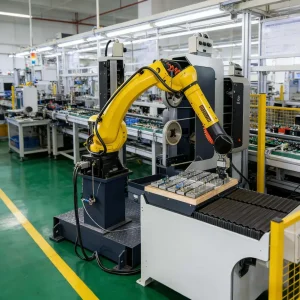
Specialized automation cells designed to process brackets, manifolds, and structural automotive castings.
Explore Technical Specs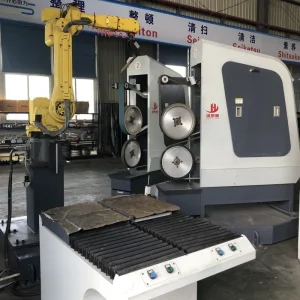
Next-generation automated casting cleaning machine designed to optimize post-processing cycles.
Explore Technical SpecsWork with our engineering team to design custom, automated casting and finishing systems that improve product consistency, safety, and throughput.
Query Project Quotation & Feasibility Study Dingzhu auto