In the manufacturing industry, precision and efficiency are paramount. The CNC Polishing Machine plays a vital role in achieving high-quality finishes on various materials. Research indicates that the global CNC machine market is expected to reach $117.39 billion by 2027, reflecting the increasing demand for automation. Polishing is essential for enhancing product aesthetics and durability, especially in sectors like automotive and aerospace.
CNC Polishing Machines utilize computer numerical control technology to automate the polishing process. This reduces the labor intensity while improving consistency and precision. For instance, reports show that CNC machines can increase productivity by up to 60% compared to traditional methods. However, the complexity of programming these machines can present challenges for operators.
Despite their advantages, CNC Polishing Machines are not without limitations. Maintenance is crucial to ensure optimal performance. Regular checks for wear and tear are necessary, as neglect can lead to costly repairs. Additionally, the initial investment for CNC technology can be significant, prompting manufacturers to weigh the cost against potential efficiency gains. Understanding these aspects is critical for businesses looking to integrate CNC technology into their operations.
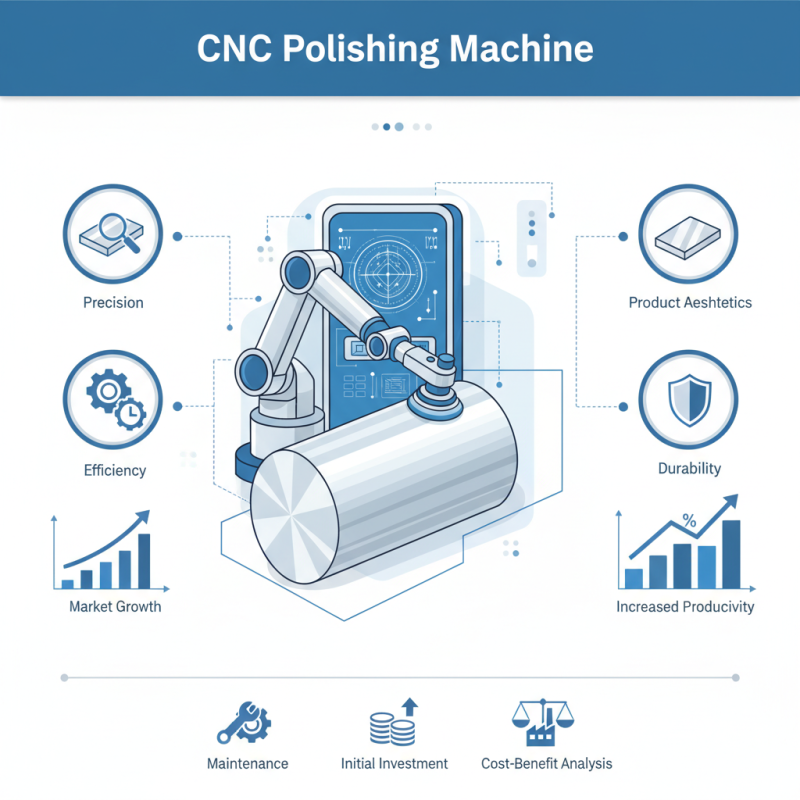
A CNC polishing machine is a cutting-edge tool used in various industries. It automates the polishing process for surfaces, ensuring precision and speed. Unlike manual polishing, CNC polishing relies on computer numerical control. This allows for consistent results, which enhances efficiency in production.
The machine operates by following pre-programmed instructions. Operators input specifications for the desired finish, including speed and pressure. The CNC system then directs the polishing tool accordingly. This method reduces human error and increases product quality. Users may initially face challenges in programming, especially when dealing with complex shapes or materials.
Many users report a learning curve when transitioning to CNC technology. It requires training to fully grasp the capabilities and limitations of the machine. Despite its benefits, some may find that not every surface can achieve the same level of polish. This can prompt reflection on the processes used and adjustments needed for different materials. With time, however, operators often gain a deeper understanding of the machine's nuances, leading to improved outcomes.
This chart illustrates the average processing time (in hours) for various materials using a CNC polishing machine. Each material showcases the efficiency and time consumption in the polishing process.
A CNC polishing machine is an advanced tool designed for precise surface finishing. Understanding its key components is crucial for maximizing its effectiveness. Typically, a CNC polishing machine consists of a controller, a spindle, polishing pads, and a worktable. Each component plays a vital role in achieving high-quality finishes on various materials.
The controller is the brain of the machine. It interprets computer-aided design (CAD) files to execute polishing tasks with pinpoint accuracy. Spindles rotate at high speeds. They ensure that polishing pads make consistent contact with the workpiece. The choice of polishing pads varies according to the material, with hard pads used for tougher surfaces. Recently, industry reports indicated that using specific polishing materials can enhance finish quality by up to 30%.
The worktable supports the item being polished. It can be adjusted to accommodate different sizes and shapes. However, not all machines offer the same versatility. Some may have limited adjustments, potentially affecting the final output. Regular maintenance of these components is essential. Neglect can lead to uneven finishes or machine malfunctions. Addressing these imperfections can significantly elevate the overall effectiveness of CNC polishing processes.
CNC polishing machines are essential in various industries, including metalworking and automotive manufacturing. These machines utilize computer numerical control (CNC) to automate the polishing process, enhancing precision and consistency. According to a report by Mordor Intelligence, the global CNC machine market is expected to reach $100 billion by 2025, reflecting growing reliance on automated solutions.
In operation, CNC polishing machines rely on programmed tools that follow predefined paths. They adjust speed and pressure dynamically, ensuring surfaces are polished uniformly. This automation reduces human error and increases efficiency. However, achieving the perfect finish still depends on choosing the right materials and settings. For example, too much pressure can lead to surface damage.
Regular maintenance of these machines is crucial. Neglecting routine checks can result in inconsistent performance. While CNC polishing technology enhances productivity, operators must remain vigilant. Understanding machine capabilities can prevent costly mistakes. Additionally, industry experts emphasize the need for continual training. Knowledge gaps can hinder effective use and limit the benefits of this advanced technology.
CNC polishing machines have transformed various industries by enhancing the quality and precision of polished surfaces. In the automotive sector, for instance, these machines help in achieving impeccable finishes on components. A report from the International Journal of Advanced Manufacturing Technology highlights that the adoption of CNC polishing technology can reduce processing time by up to 30%, improving overall productivity.
In the aerospace industry, these machines are crucial for ensuring parts meet stringent safety standards. Polished surfaces can significantly affect aerodynamics and performance. Reports show that using CNC technology minimizes human error, which could compromise safety. Furthermore, the medical device industry relies on CNC polishing to produce components that require exceptional cleanliness and finesse, as any imperfection can lead to contamination.
**Tip:** Regular maintenance of CNC polishing machines is essential for optimal performance. Check components frequently to avoid wear and tear.
While CNC polishing machines offer numerous benefits, there are challenges to consider. The setup and programming of these machines can be complex, requiring skilled operators. Additionally, there’s a need for constant calibration to ensure precision. Companies must weigh the advantages against potential labor and operational costs.
**Tip:** Continuous training for operators can enhance efficiency and reduce errors during the polishing process.
| Industry | Application | CNC Polishing Machine Features | Benefits |
|---|---|---|---|
| Automotive | Polishing car body panels and components | High precision and automation | Enhanced finish quality and reduced labor costs |
| Electronics | Polishing of circuit boards and components | Precision polishing heads and multi-axis control | Improved conductivity and surface finish |
| Aerospace | Polishing aircraft components for optimal performance | Robust and durable machine design | Increased safety and regulatory compliance |
| Jewelry | Polishing metal and gemstone surfaces | Fine polishing capabilities and customizable settings | Enhanced product quality and aesthetic appeal |
| Medical | Polishing surgical instruments and implants | Precision and cleanliness in operation | Improved patient safety and compliance with standards |
CNC polishing machines offer significant advantages over traditional manual polishing. These machines automate the polishing process, ensuring a consistent finish across various materials. With precise control, they minimize human error, which is common in manual methods. The result is a high-quality polish that meets stringent standards.
Efficiency is another key factor. CNC machines operate faster than manual labor, reducing production time. This speed does not compromise quality; rather, it enhances it. Similarly, operators can focus on other essential tasks while machines handle the polishing.
However, while CNC machines offer many benefits, they also come with a learning curve. Operators need specialized training to set up and maintain these machines correctly. They must also monitor the process, as no system is perfect. Misalignment or improper settings can lead to subpar finishes. Reflecting on these challenges improves the overall effectiveness of CNC polishing.
: A CNC polishing machine automates surface polishing, ensuring speed and precision. It uses computer control for consistent results.
The machine follows pre-programmed instructions. Operators input specifications for finish, speed, and pressure.
Key components include a controller, spindle, polishing pads, and worktable. Each part is vital for quality finishes.
Neglecting maintenance can lead to uneven finishes or malfunctions. Regular checks help achieve optimal performance.
Users often experience a learning curve in programming. Some may struggle with complex shapes or materials.
They achieve impeccable finishes and reduce processing time. Adoption can improve overall productivity by up to 30%.
Polished surfaces affect aerodynamics and performance. CNC technology minimizes human errors that compromise safety.
Companies must balance the machine's benefits with labor and operational costs. Skilled operators are essential for success.
Exceptional finesse is required to prevent contamination. CNC polishing ensures components meet high cleanliness standards.
Continuous operator training and regular equipment calibration are key to improved efficiency and reduced errors.
A CNC polishing machine is an advanced tool designed for precision polishing of various materials, utilizing computer numerical control technology. Its key components include a motorized spindle, polishing pads, and a computerized control system, which work together to achieve uniform and high-quality surfaces. The operation of a CNC polishing machine involves programming specific polishing parameters, allowing for automated and repeatable processes that greatly enhance efficiency compared to manual polishing methods.
CNC polishing machines find applications across diverse industries, such as automotive, aerospace, and electronics, where high surface finishes are essential. The primary advantages of using CNC polishing machines include increased accuracy, reduced labor costs, and improved productivity, making them an indispensable asset for manufacturers aiming for superior quality and consistency in their products.

Dingzhu auto